
Description:
Modern Ceramic Garden Stand
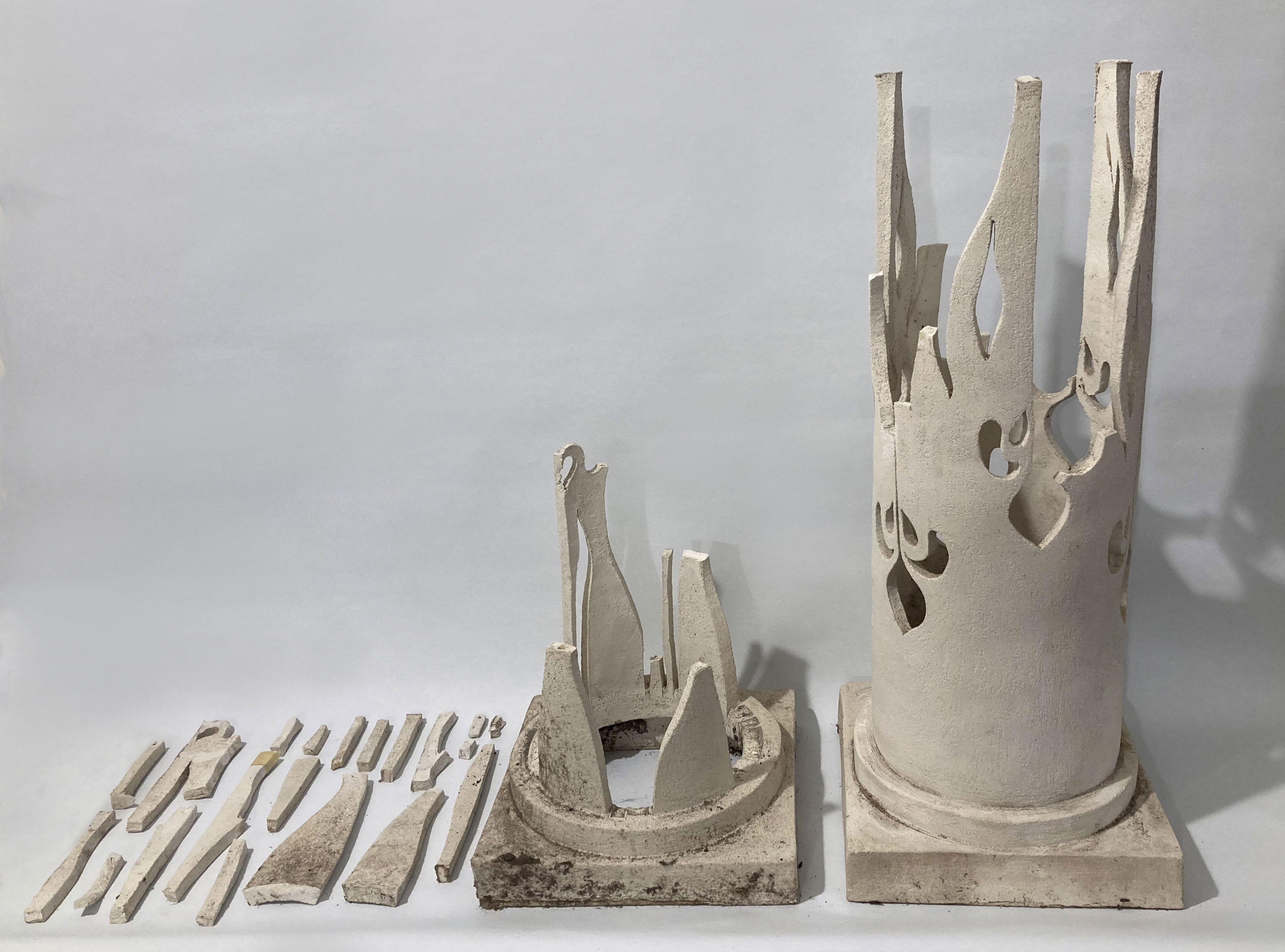
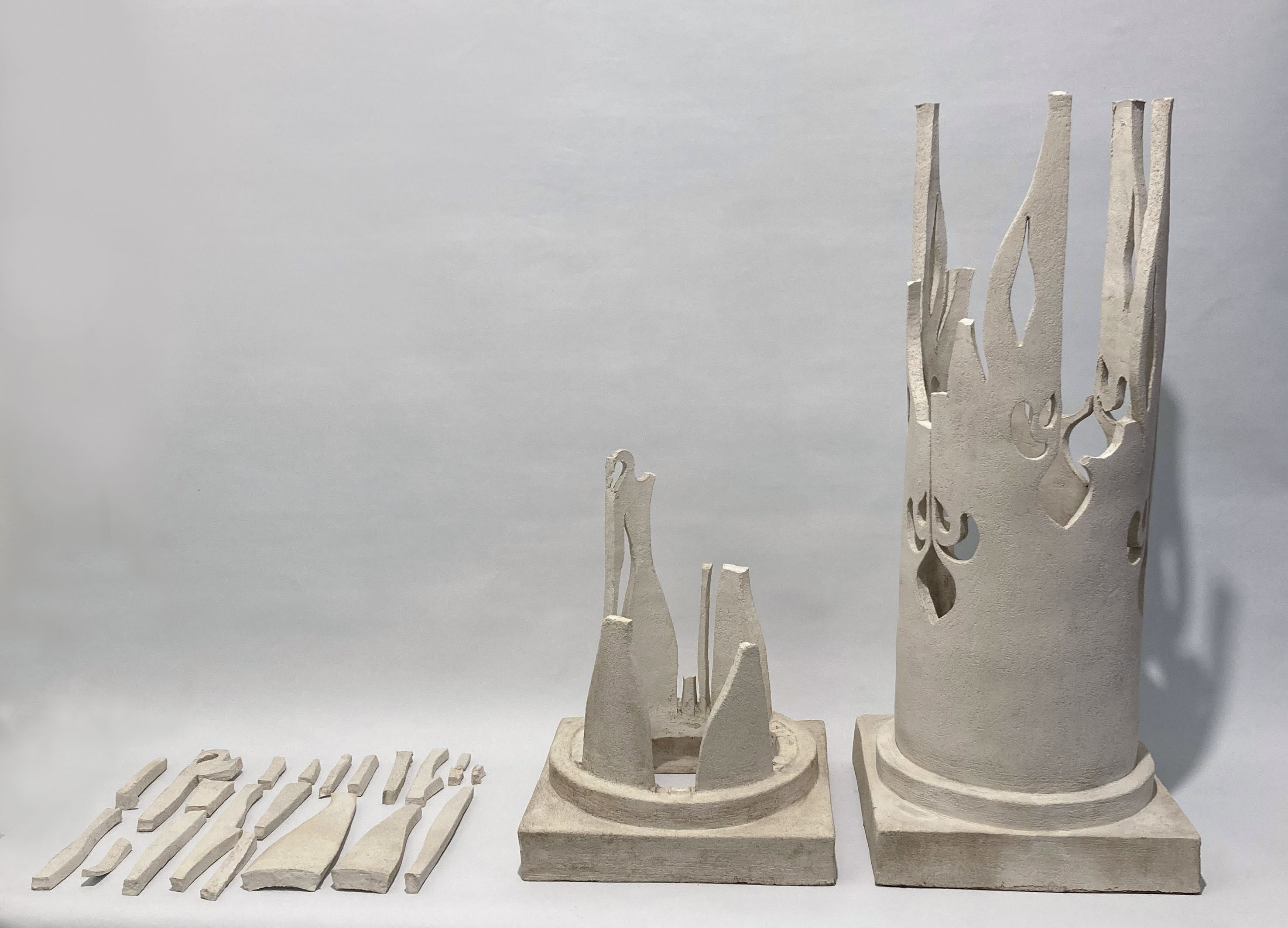
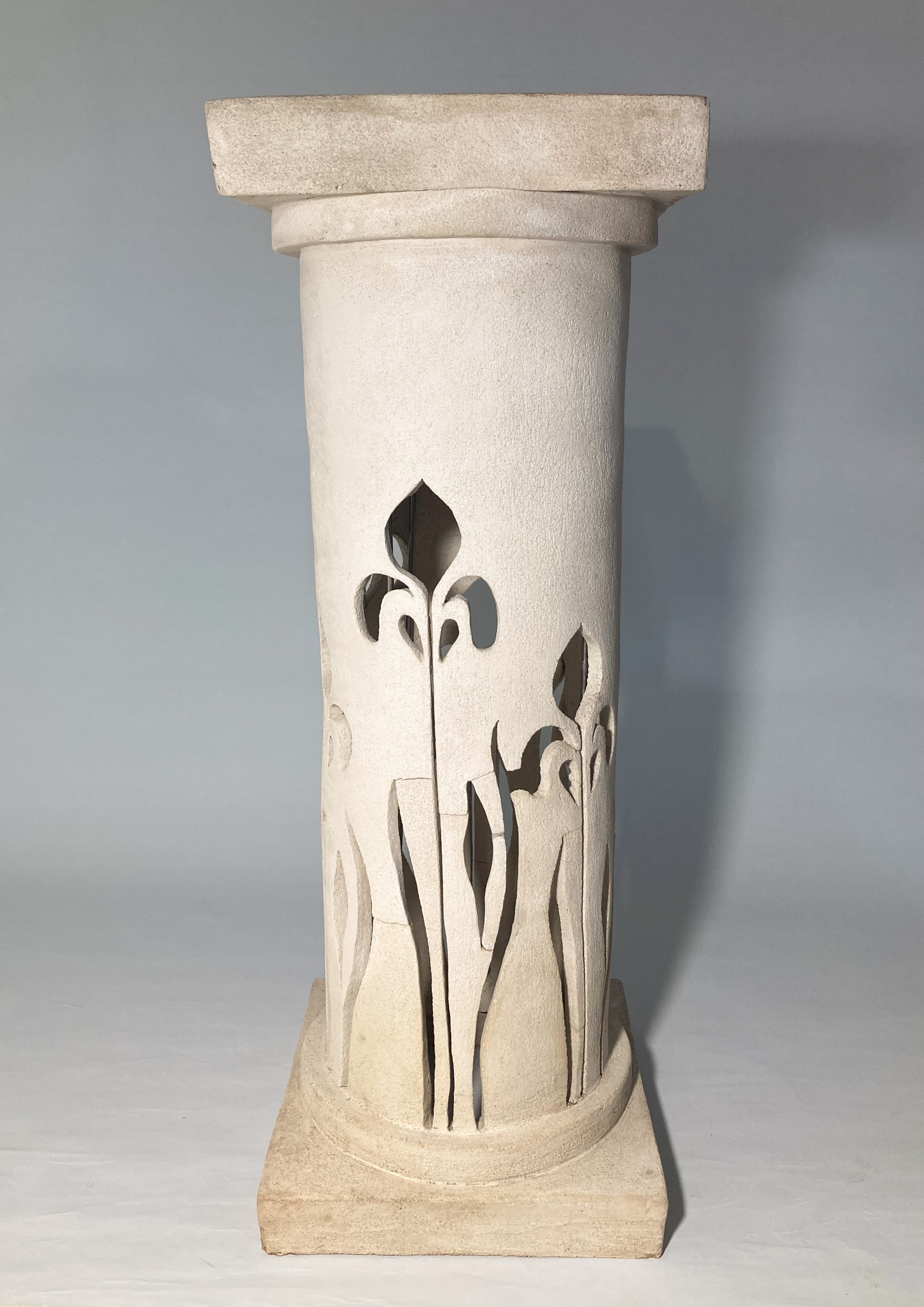
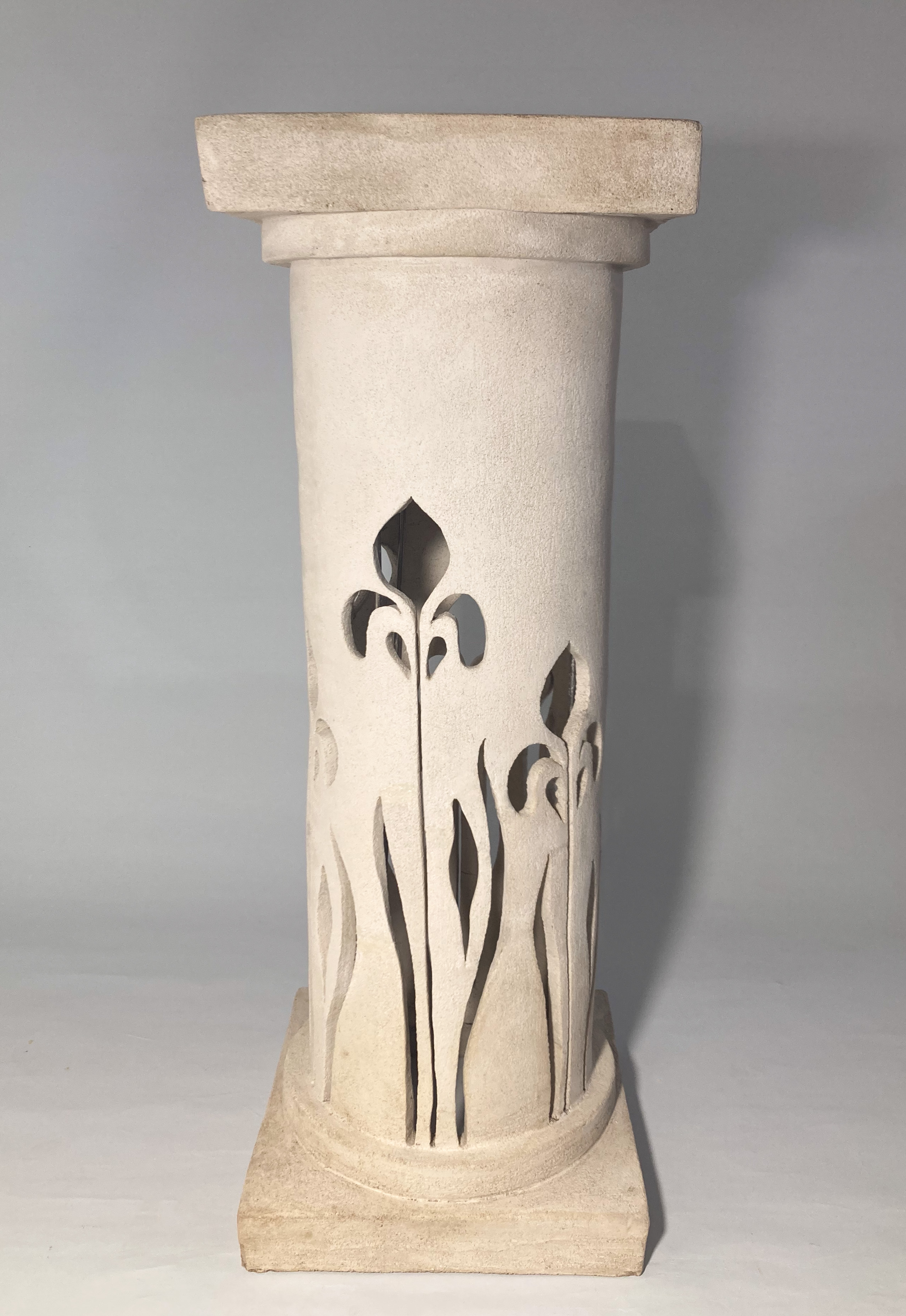
Treatment of a modern ceramic garden stand which experienced physical deterioration due to being placed outside in the winter. The fragments were cleaned with water and a non-ionic surfactant. then small areas and break-lines were filled and retouched. It is now back in its rightful place in the garden.
Client:
Private Client
Project Date:
2025
Item Origin:
Netherlands, 1960-1970

Description:
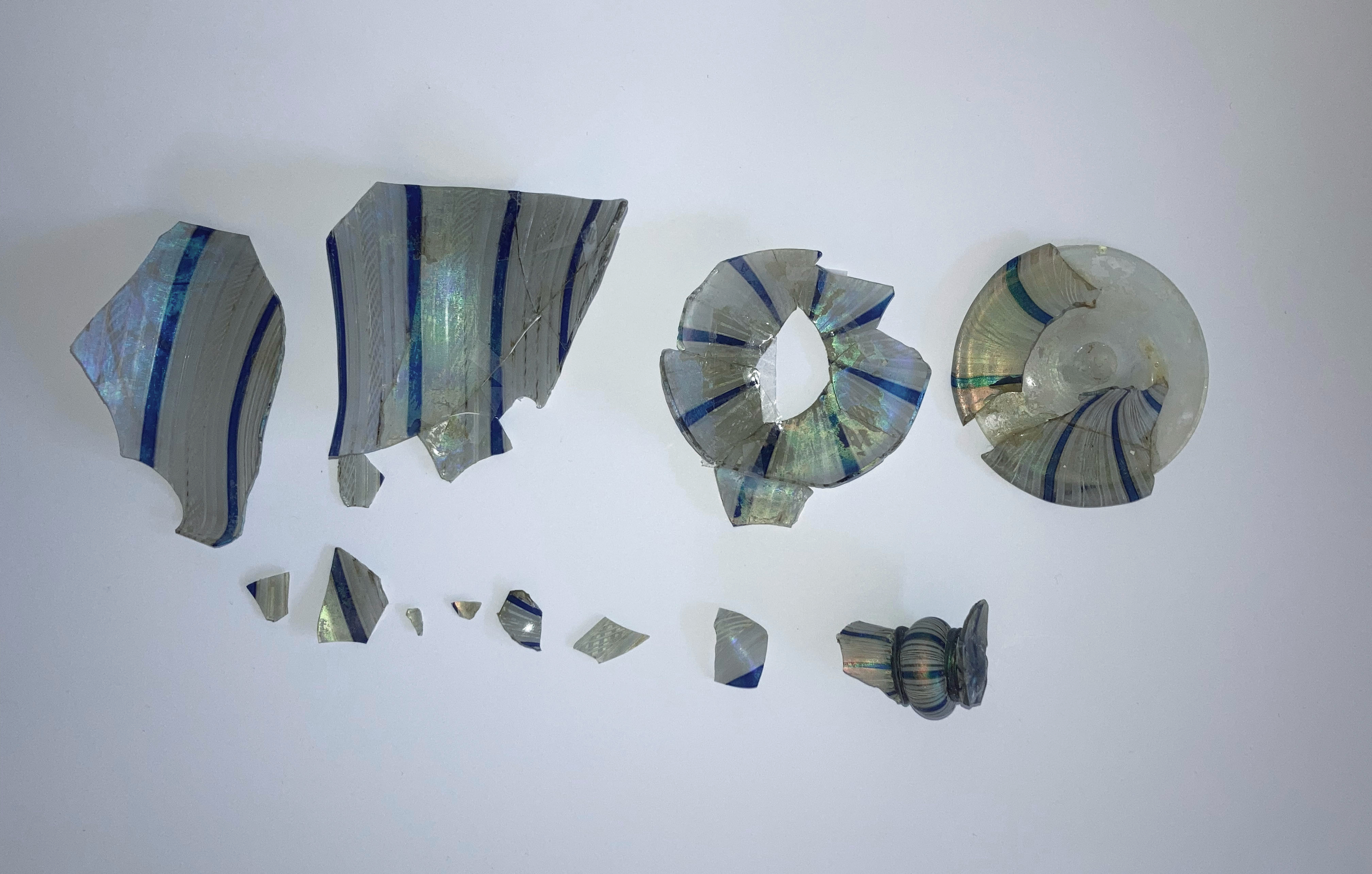
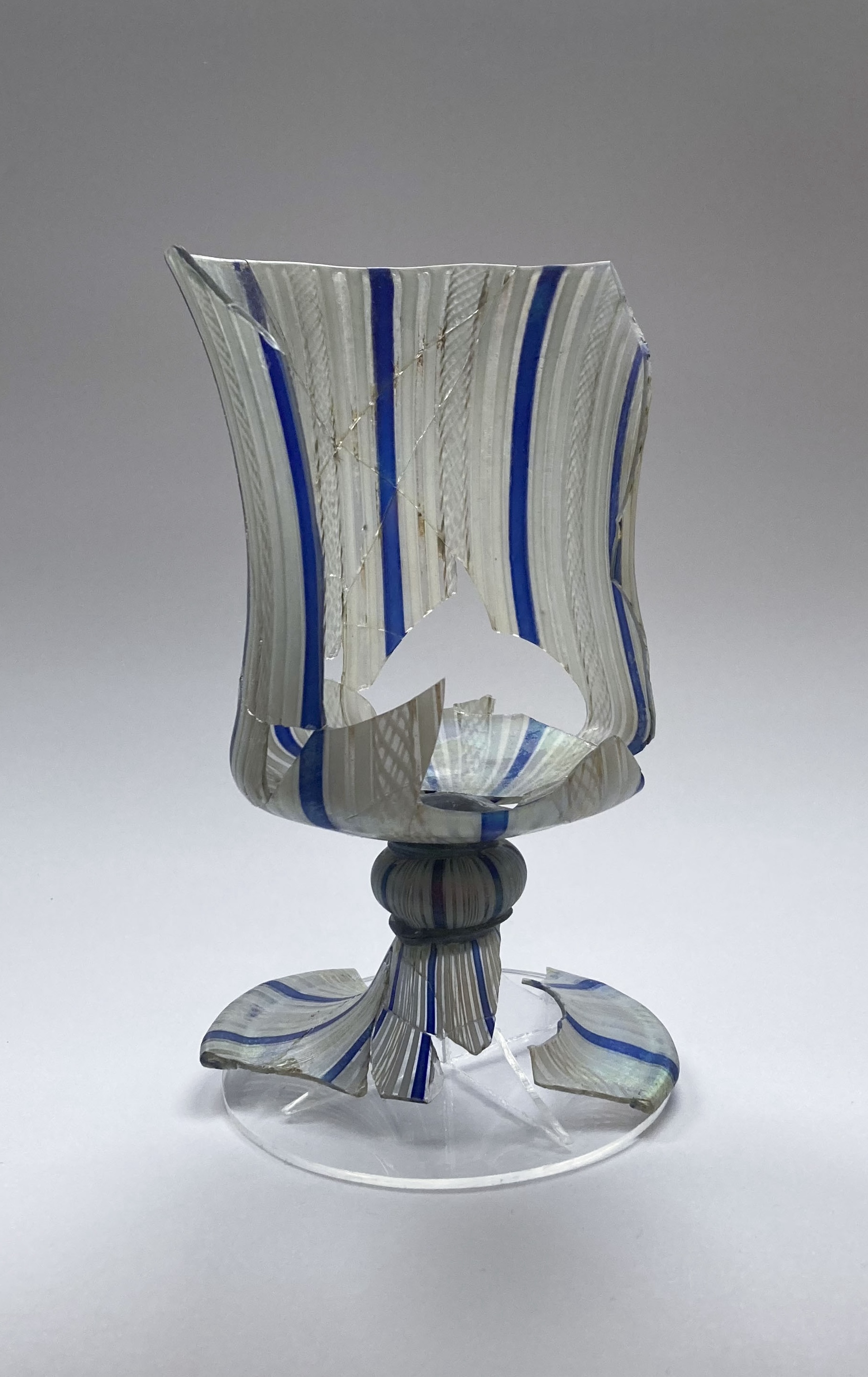
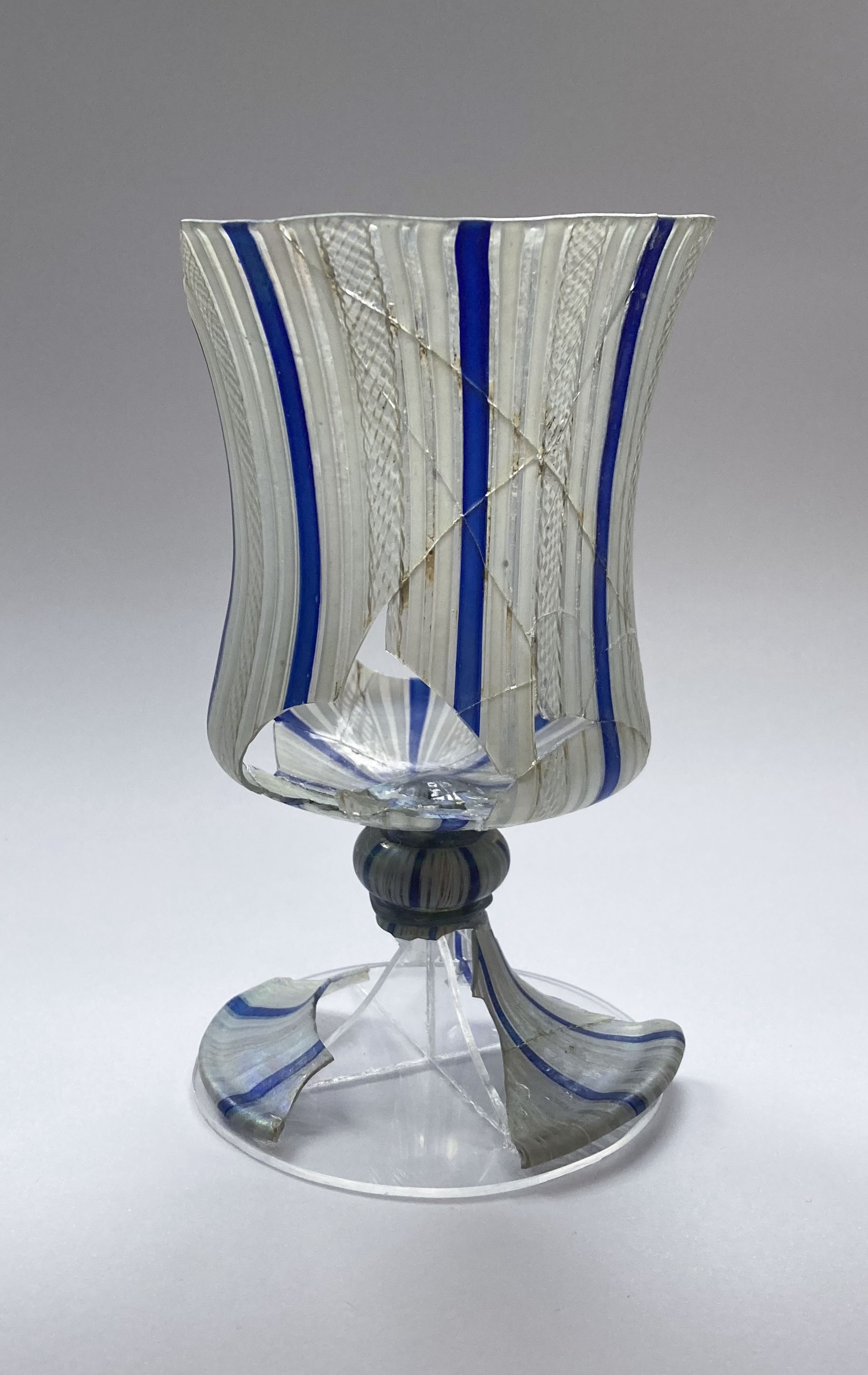
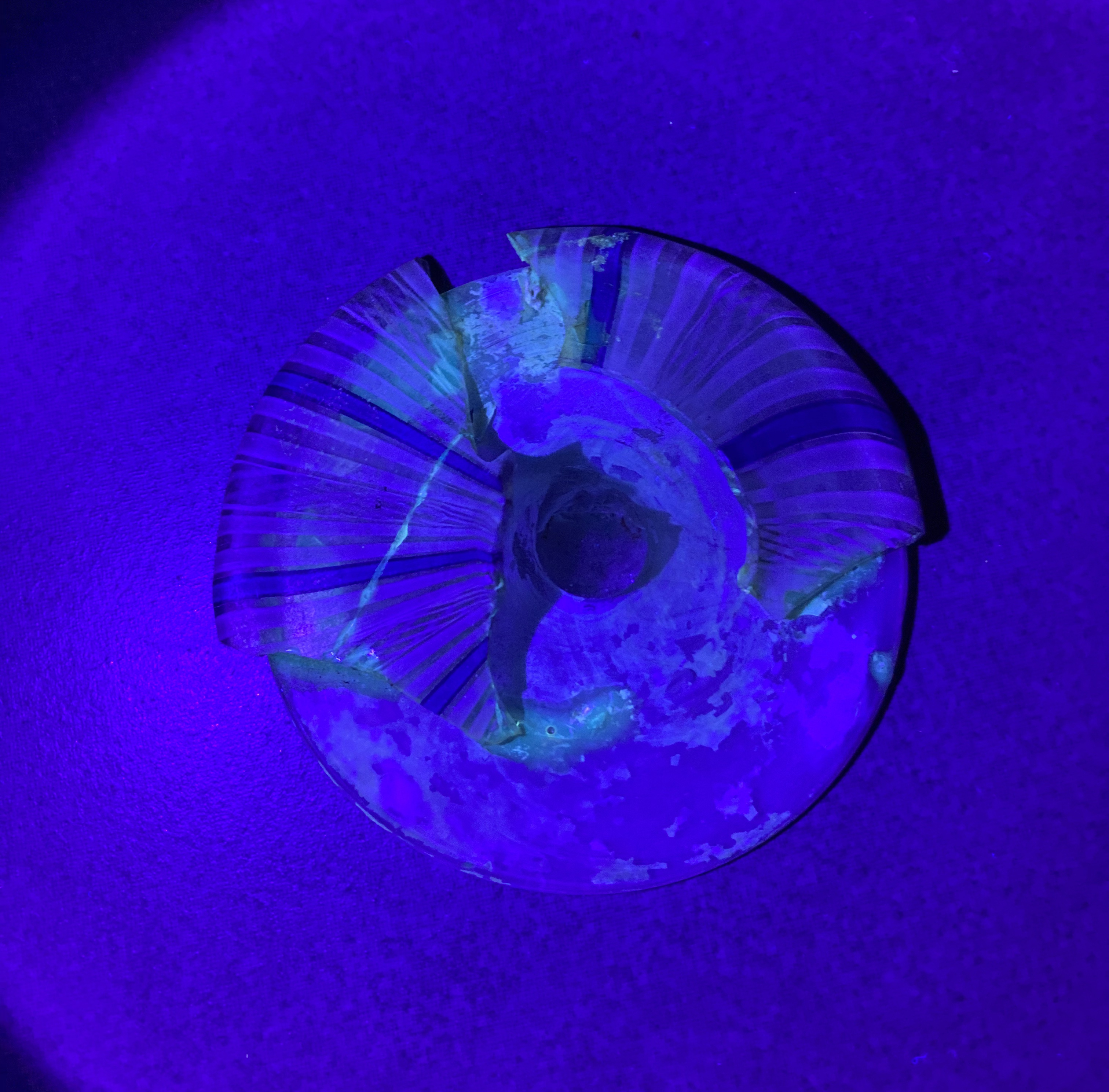
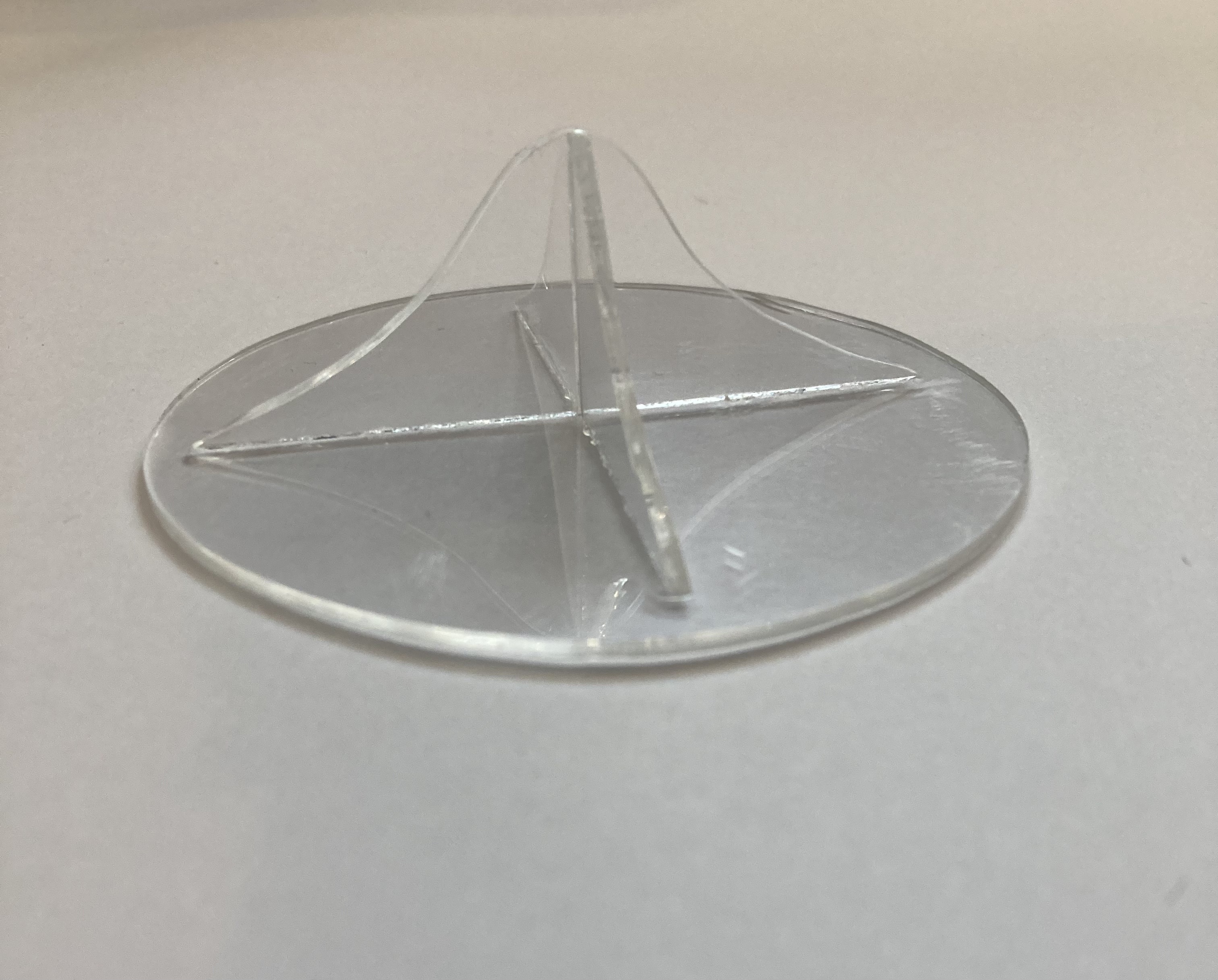
Façon de Venise Goblet
Treatment of a 16th-17th century Façon de Venise goblet which had been previously restored but had broken apart again. The old adhesive had become yellowed and brittle. The foot fragments had been adhered to a later glass foot which acted as a base. The old restoration material (including the old foot) was cleaned. The cleaned fragments were then adhered with Paraloid B-72. A support was made with plexiglass and the glass adhered to the base with Paraloid B-72.
Client:
Private Client
Project Date:
2024
Item Origin:
Europe, 16th-17th century
Description:
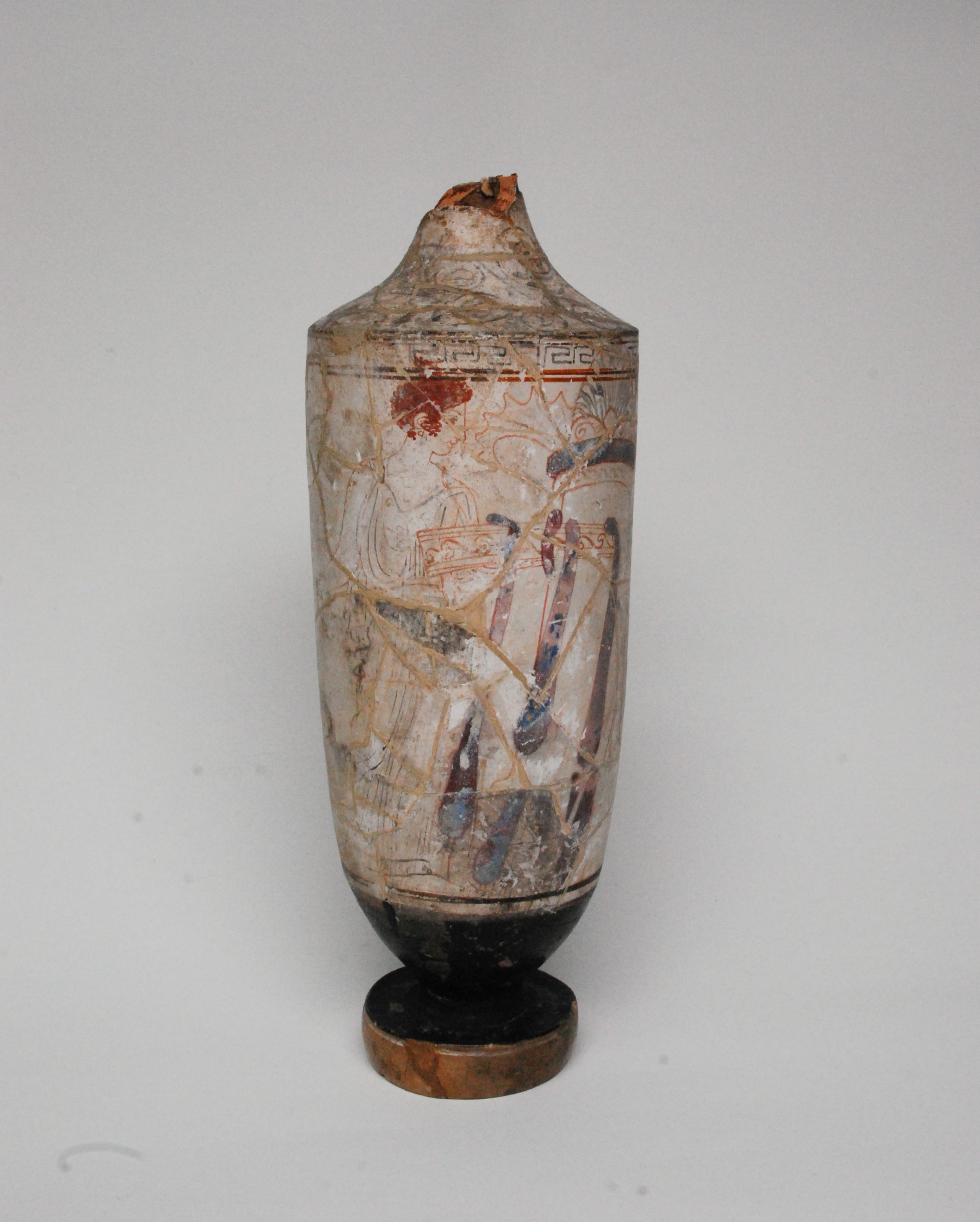
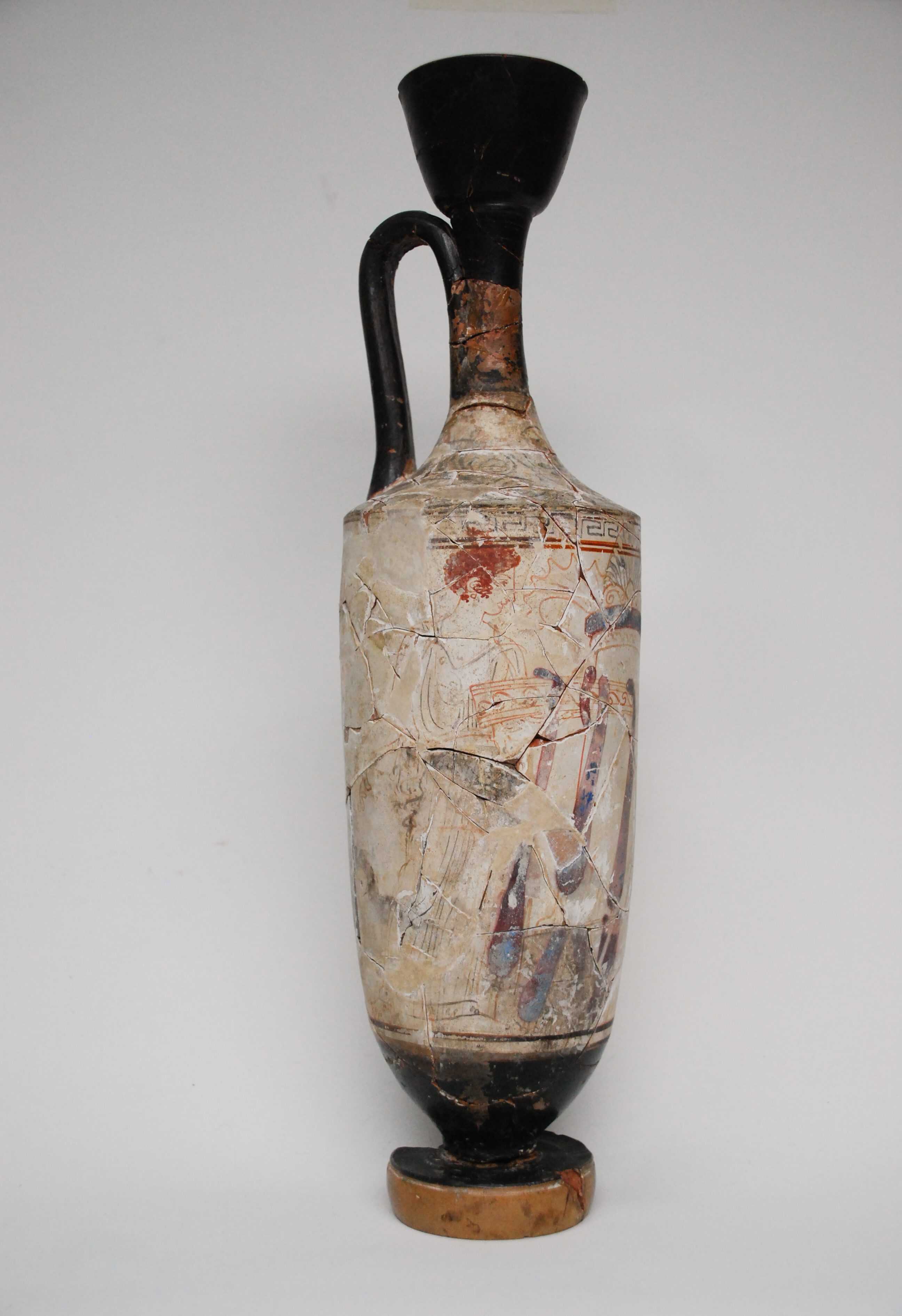
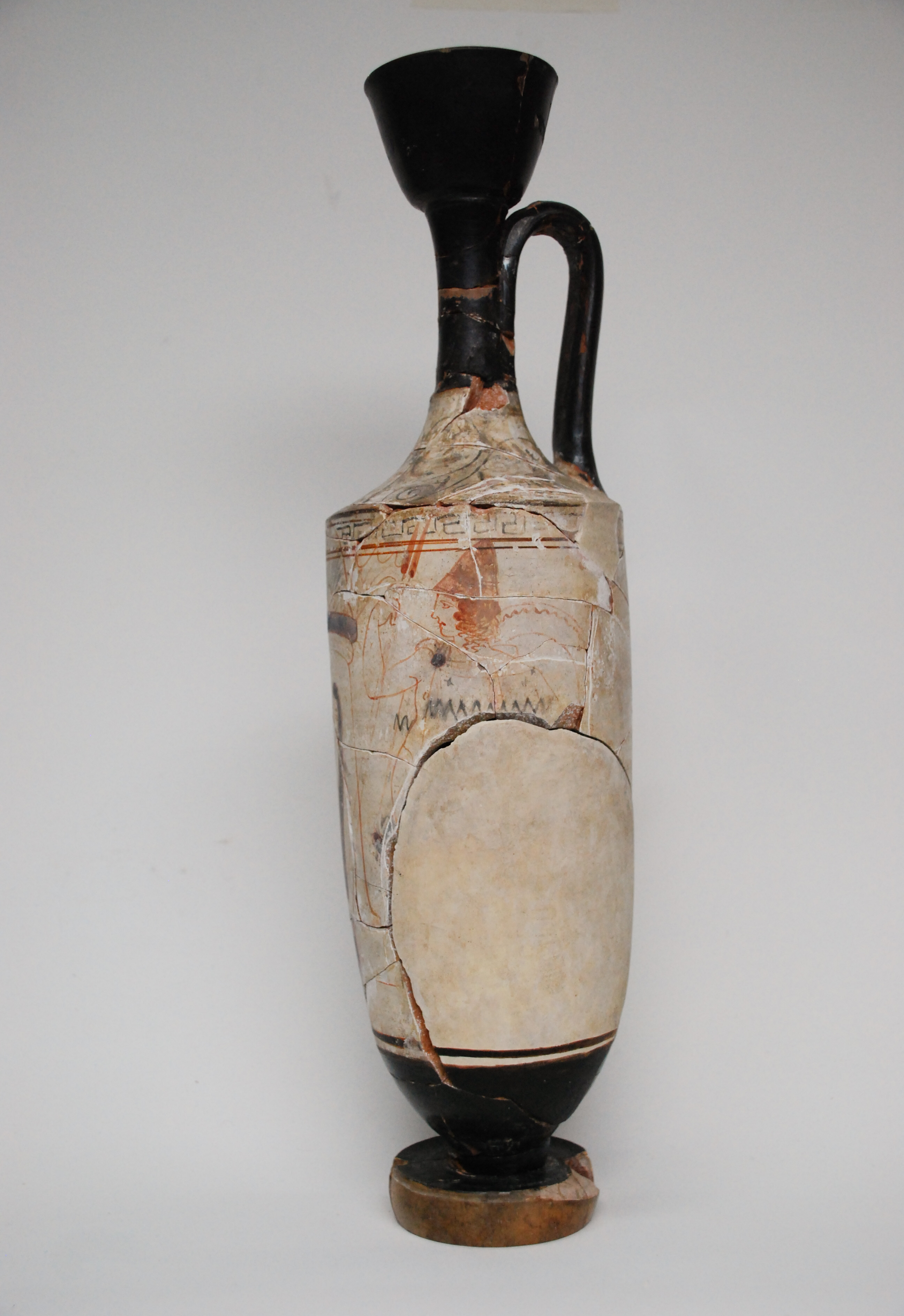
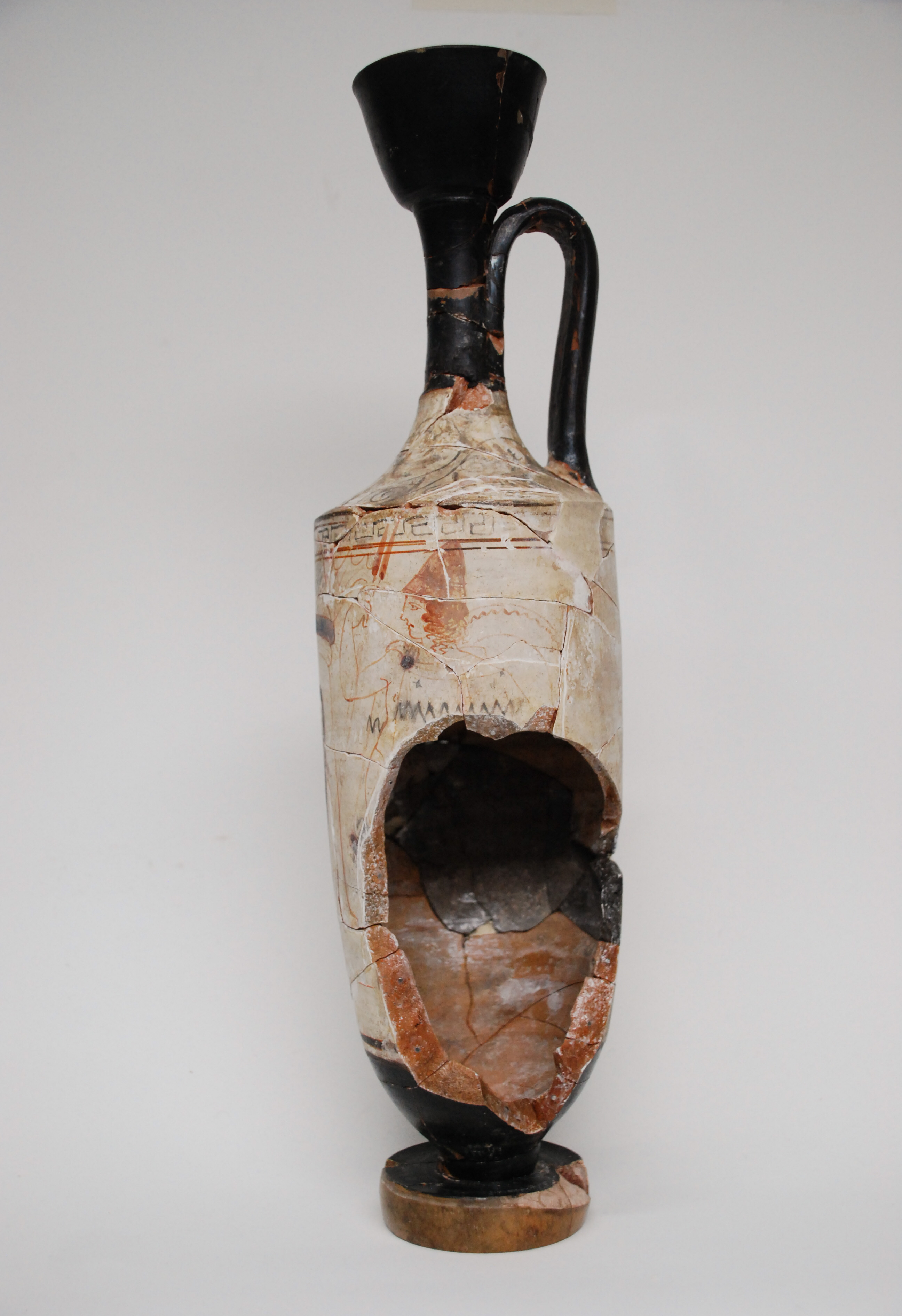
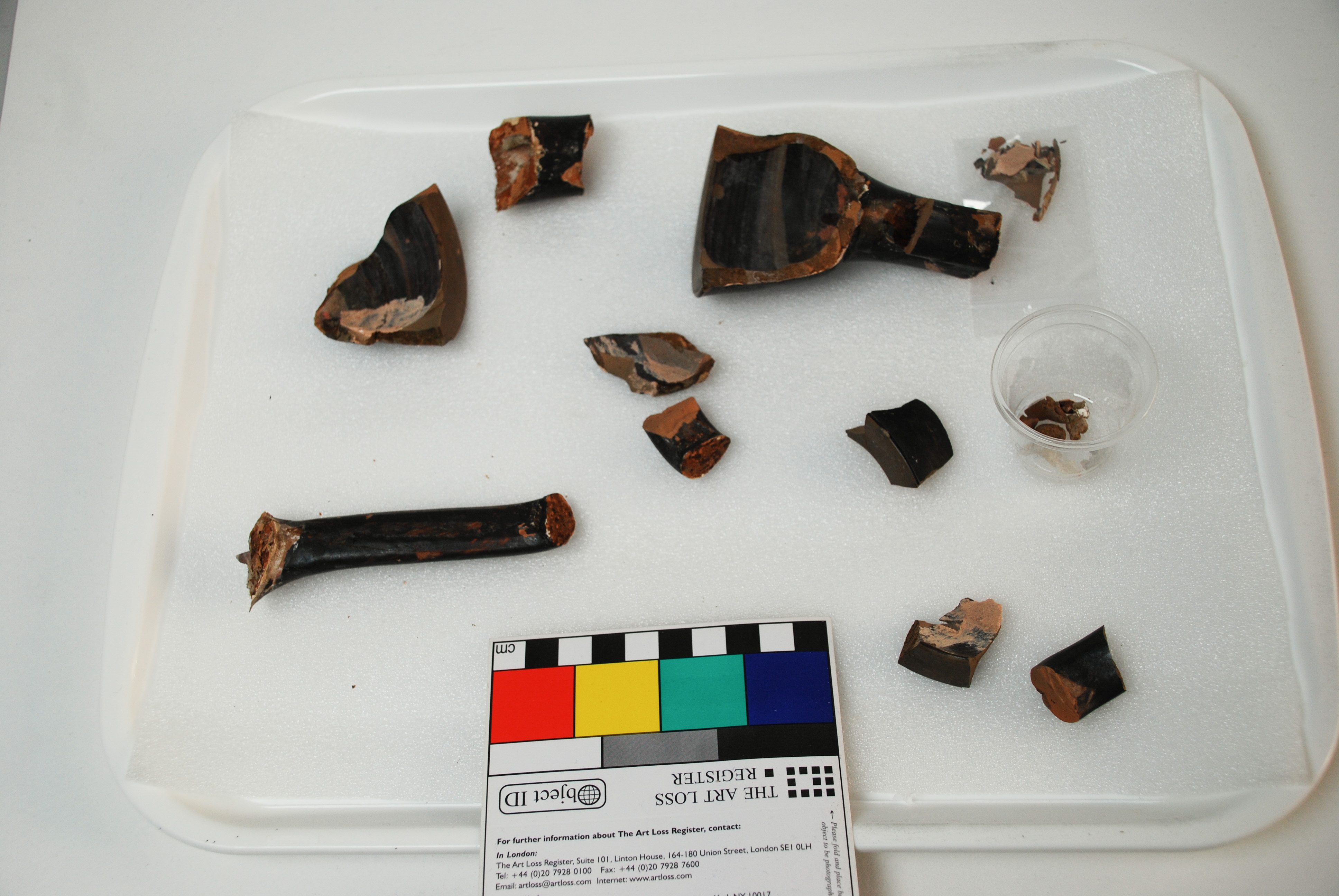
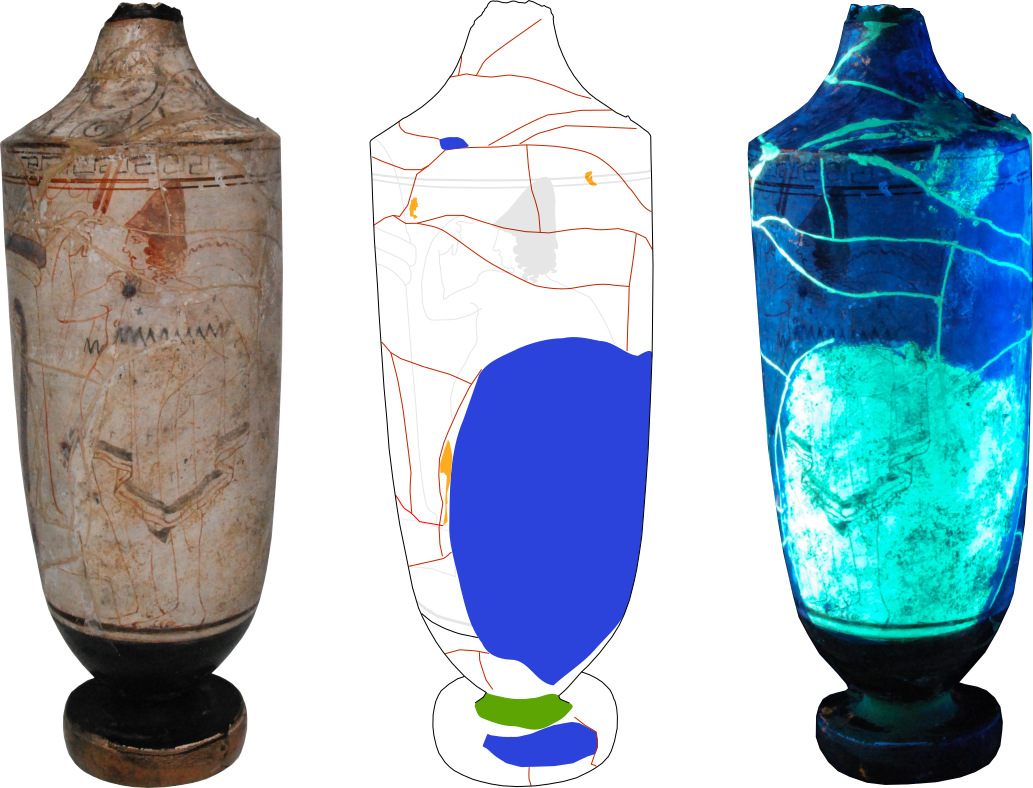
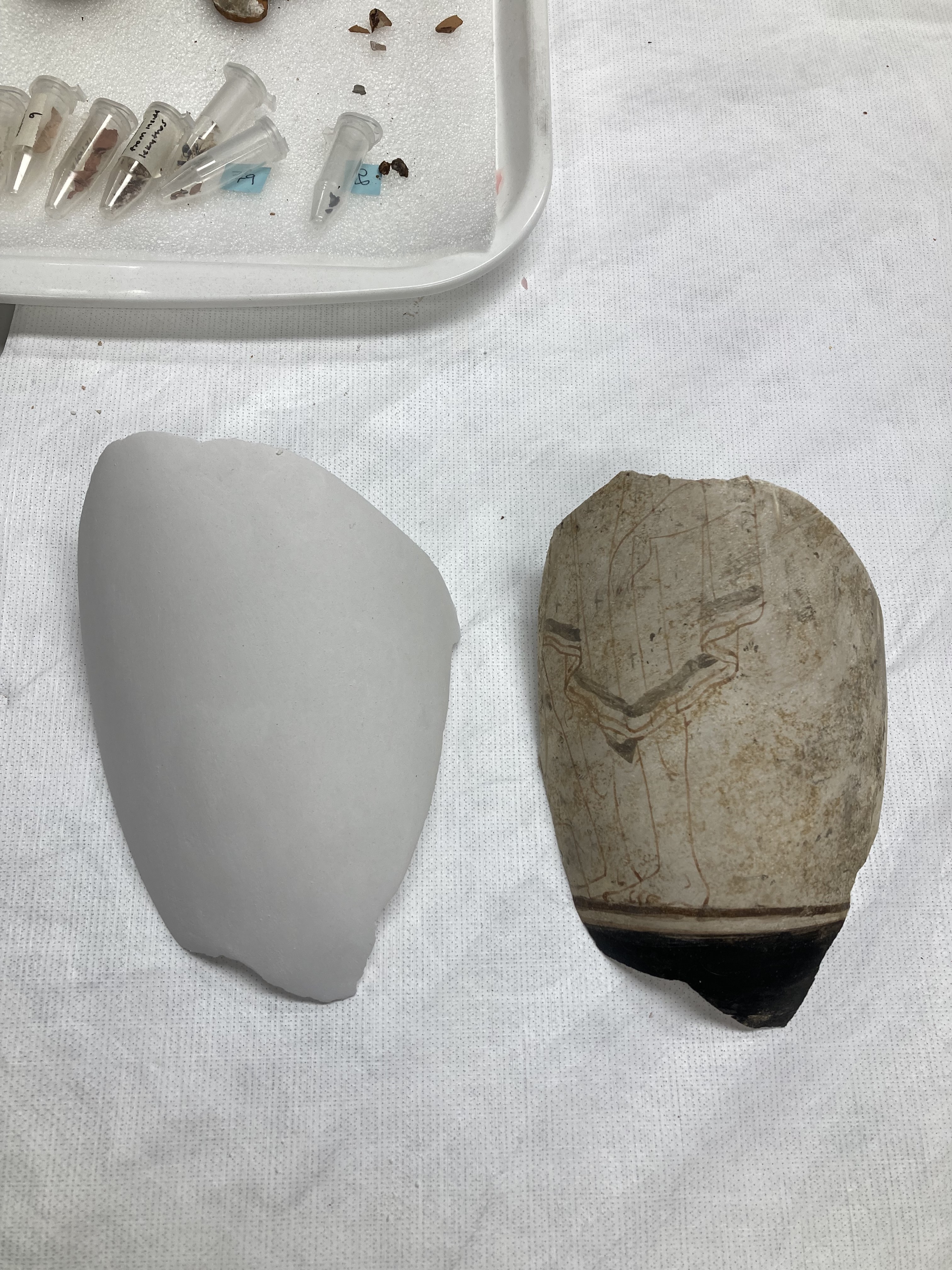
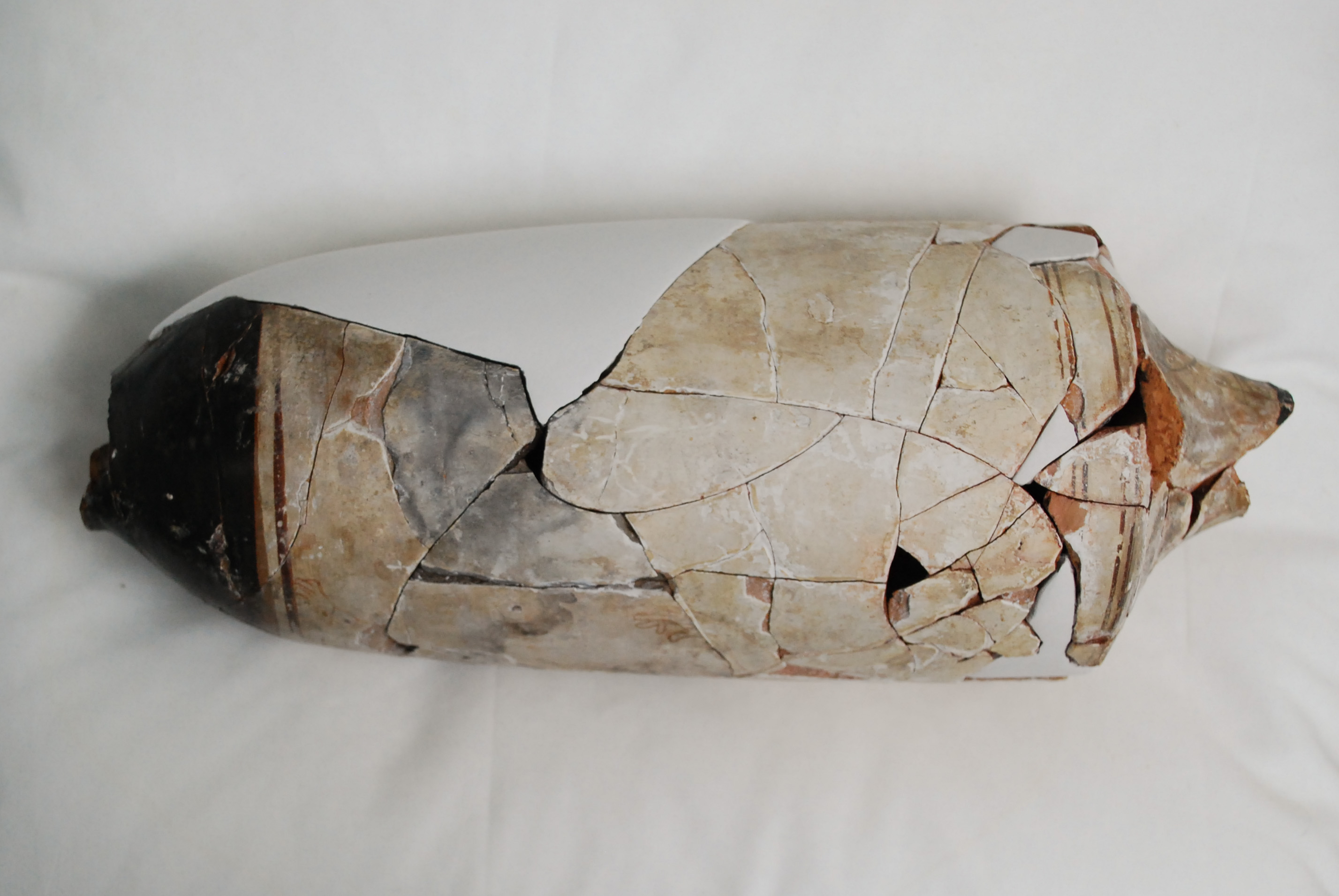
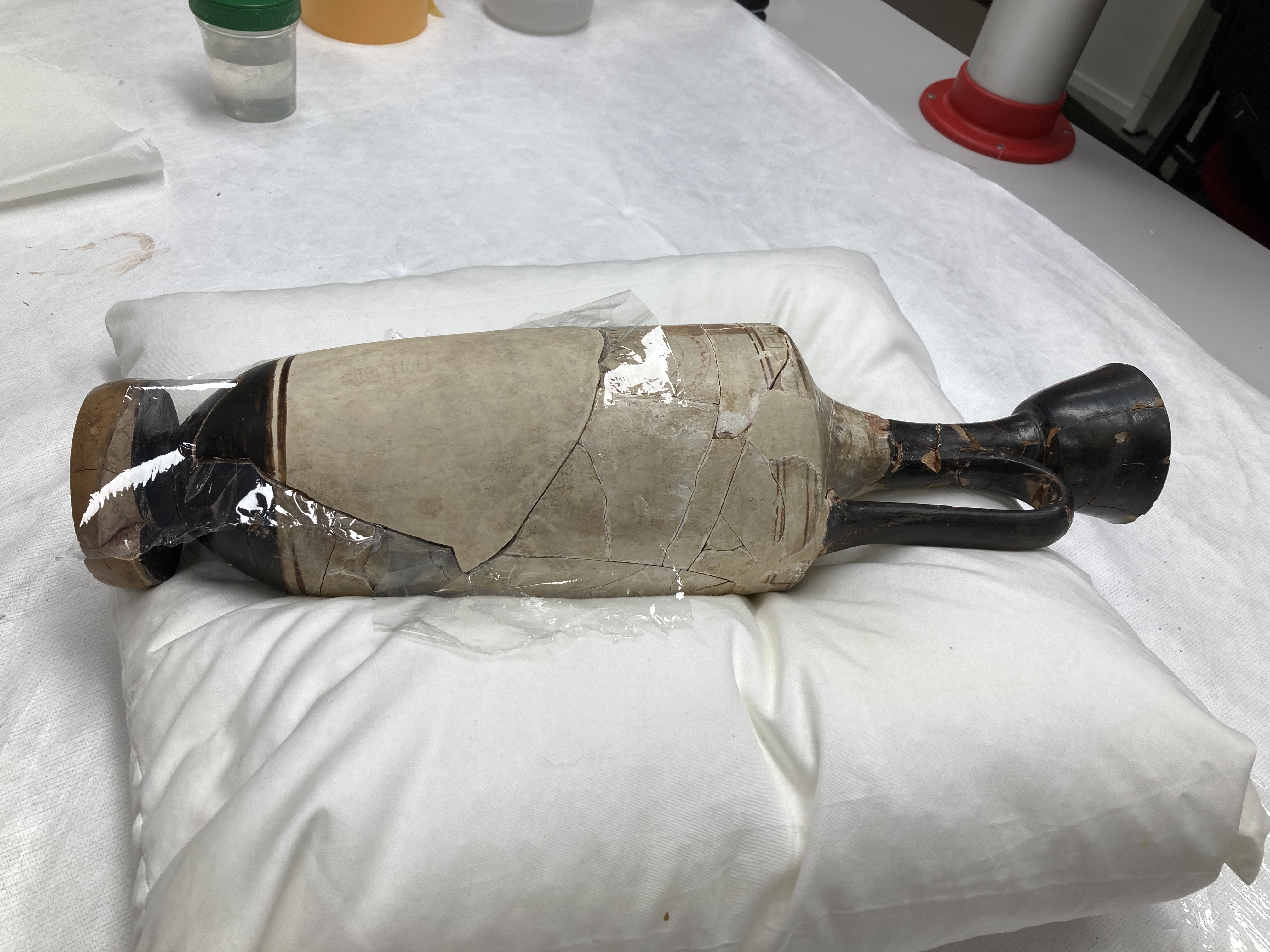
White Ground Lekythos
Treatment of an ancient Greek white-ground lekythos. Previously applied restoration materials and shellac adhesive were removed and the fragments cleaned. The fragments were then re-adhered and new fills made. Using magnets, the large fill on the side of the object was made detachable, so that it can be placed on and off the object as desired.
APM08218 Courtesy of The Allard Pierson (www.allardpierson.nl)
Client:
Allard Pierson Museum
Project Date:
2023
Item Origin:
Athens, 425-400 BC

Description:
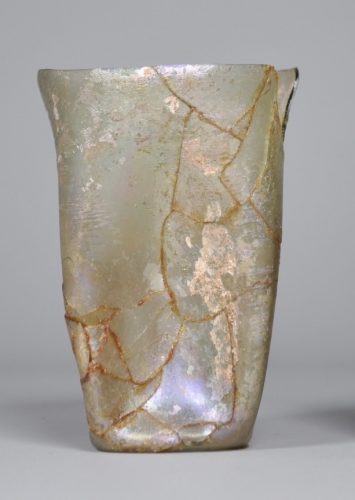
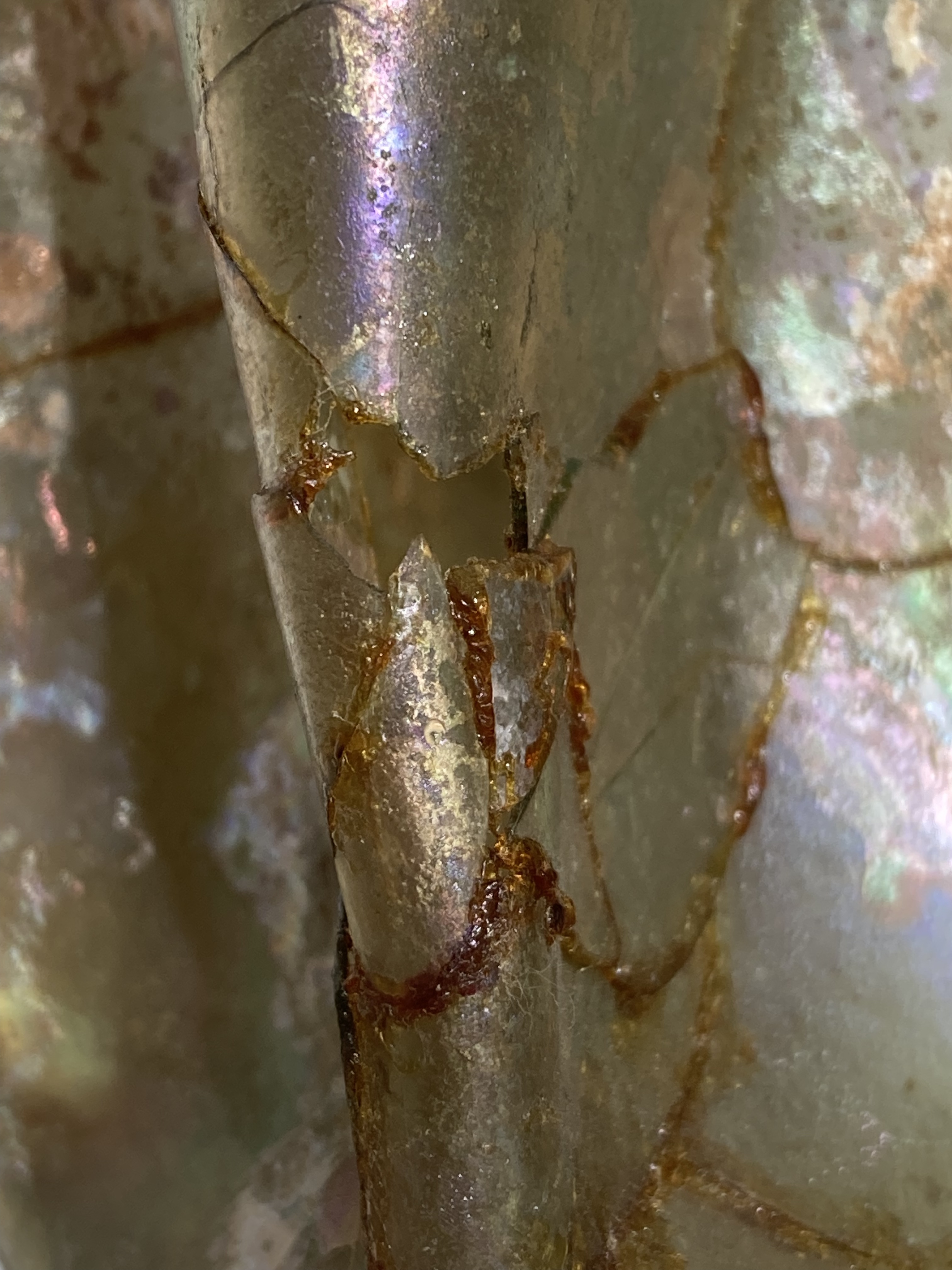
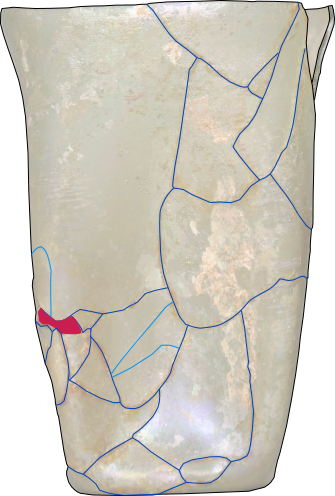
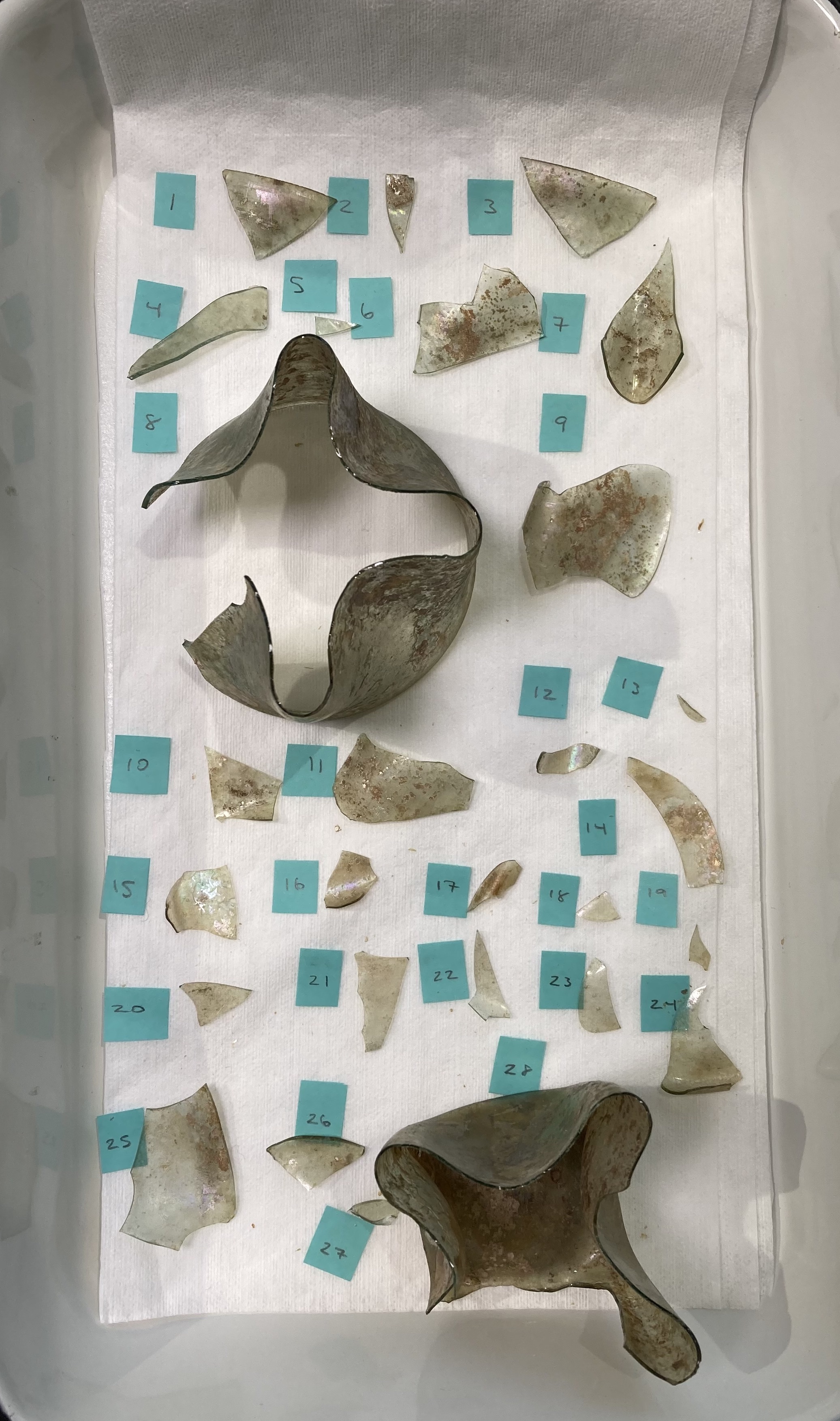
Ancient Folded Glass Beaker
Treatment of a previously adhered ancient glass folded beaker from Syria (1st-3rd cent) at the Corning Museum of Glass. The glass is weathered and fragmented but had been restored before coming into the museum’s collection. The old adhesive, animal glue, was removed by first swelling it with warm water. The object was dismantled, and all the old animal glue was cleaned away. The fragments were re-adhered using Paraloid B-72, which is a more stable adhesive.
CMoG 2022.1.34. Courtesy of The Corning Museum of Glass (www.cmog.org)
Client:
Corning Museum of Glass
Project Date:
2023
Item Origin:
Syria, 1st-3rd cent AD
Description:
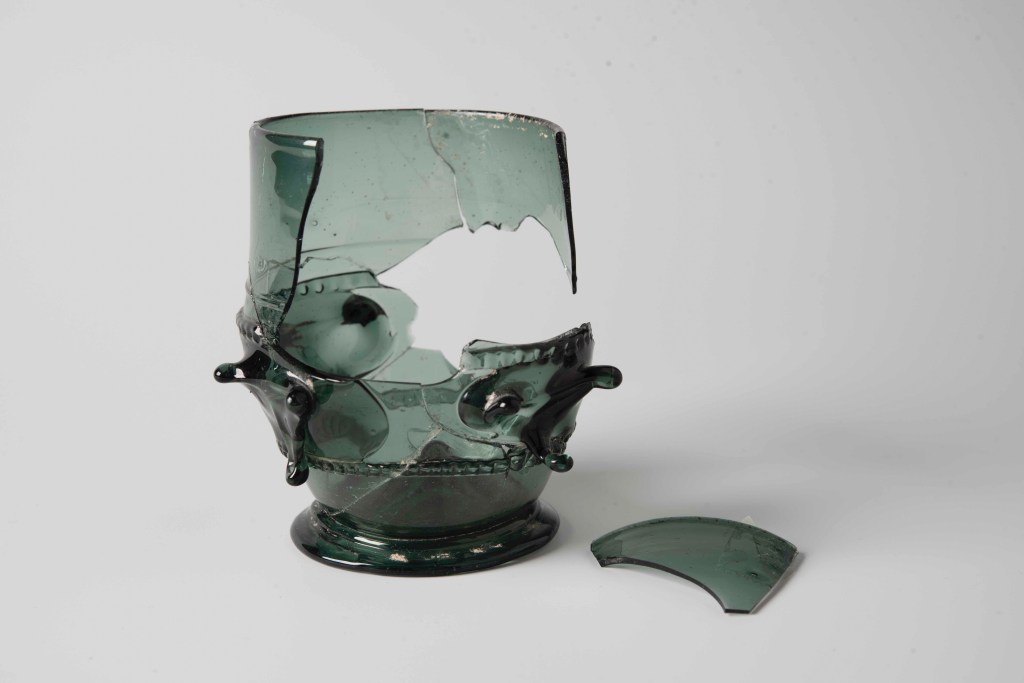
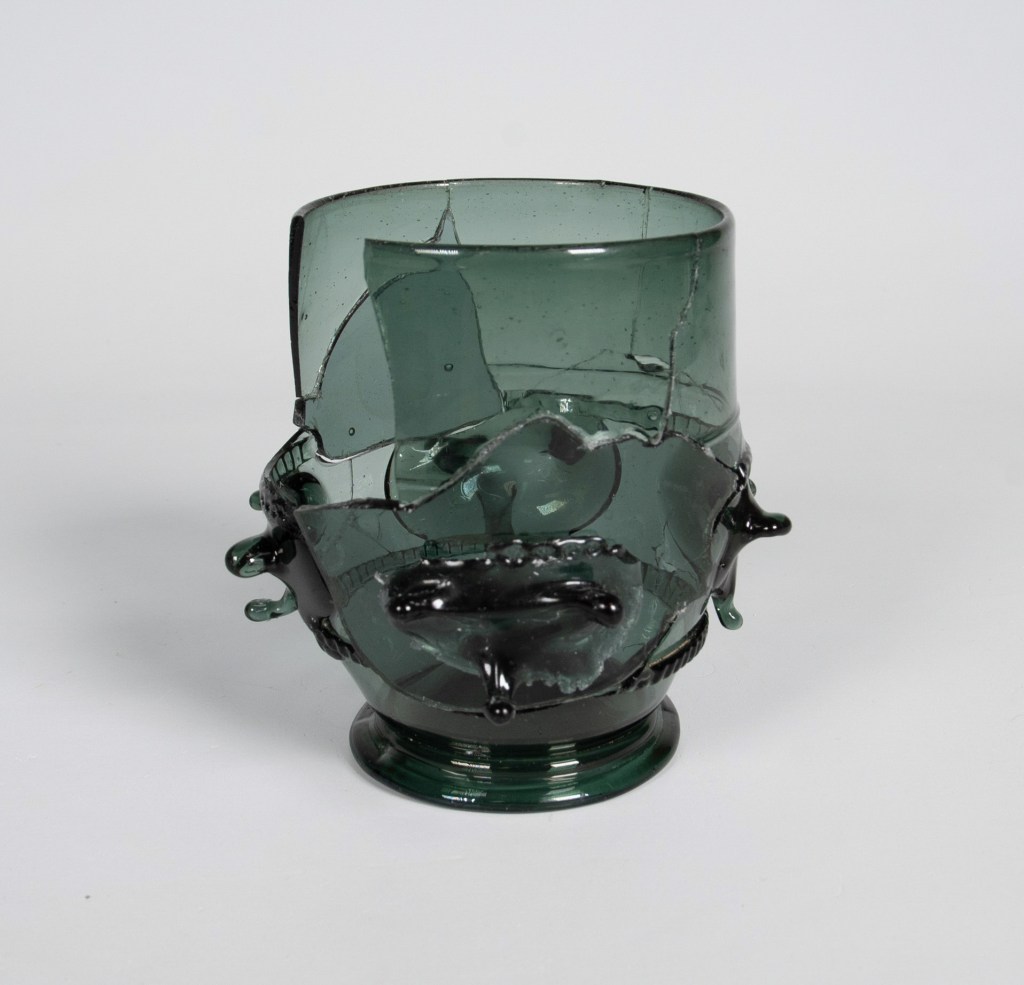
Medieval Animal-Head Beaker
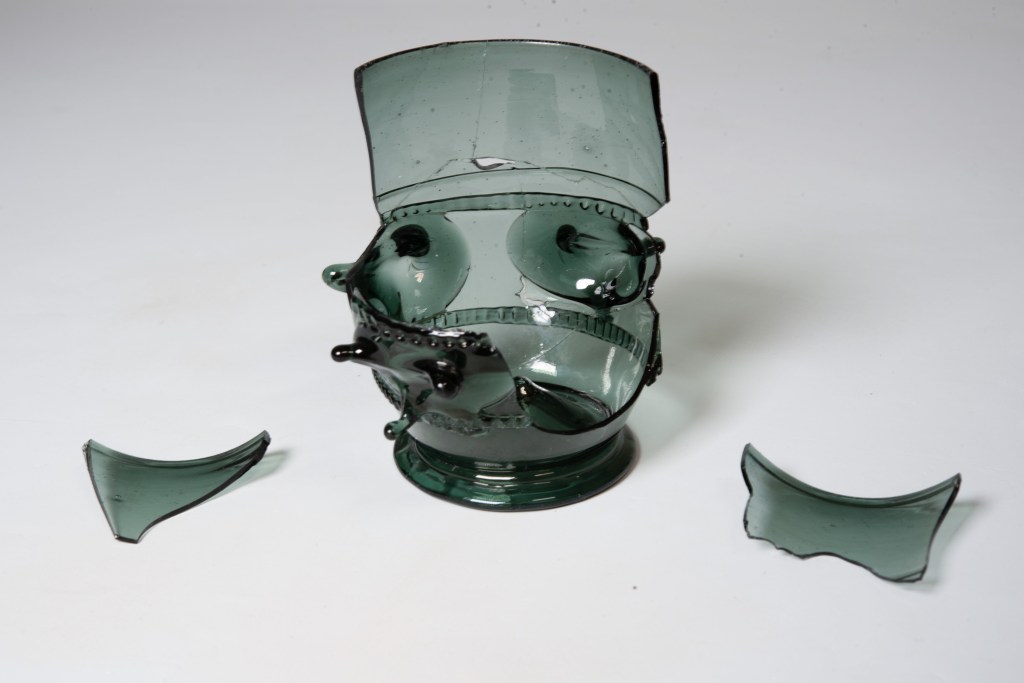
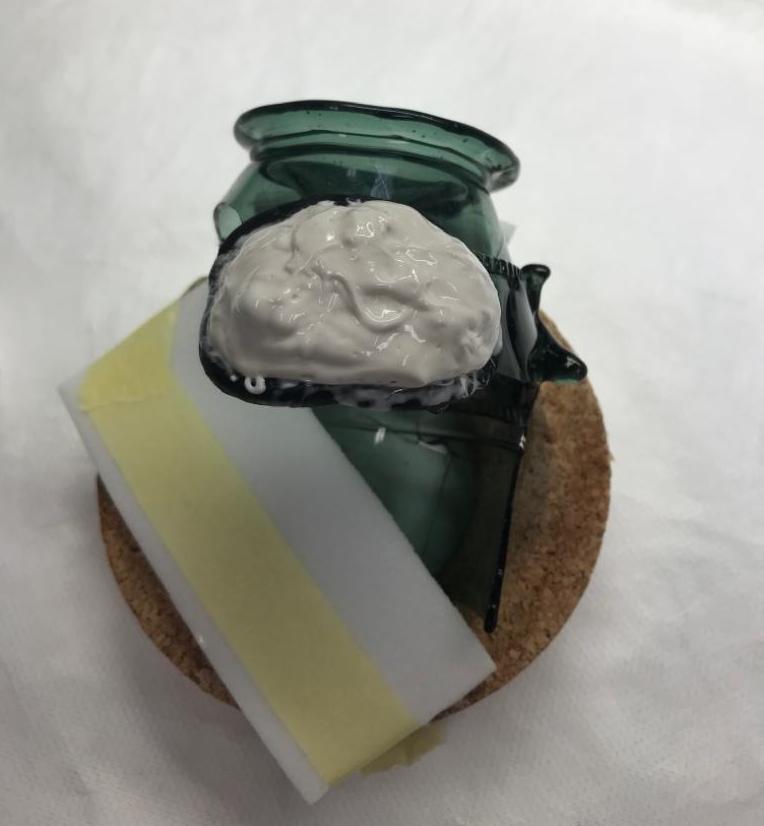
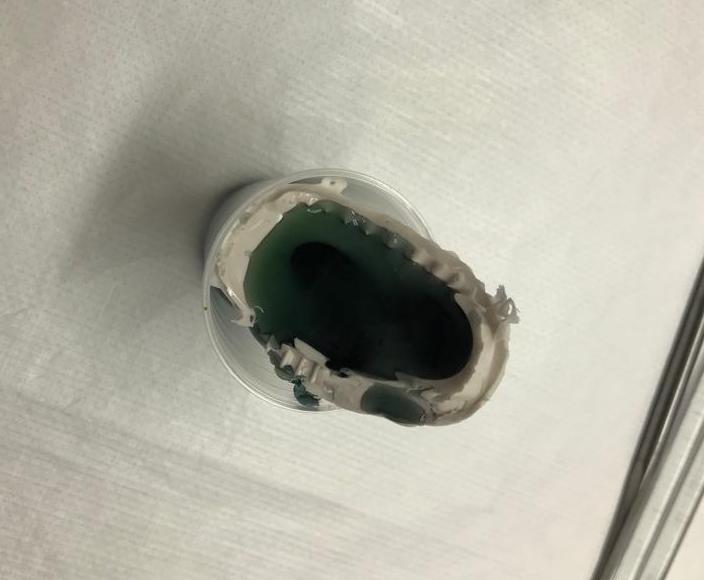
Treatment of a medieval animal-head stud forest-glass beaker from an archaeological context in Cologne, Germany. The eight fragments were cleaned and adhered with HXTAL-NYL-1 epoxy resin with a Paraloid B-72 barrier layer. Fills made from dyed HXTAL-NYL-1 were made to stabilise fragments which were not supported by other fragments. The fill material was cast as a sheet and then manipulated to the right shape and curve when the resin was partially set. An animal-head stud decoration was moulded and reconstructed using the same resin as the fill.
Client:
Private Client
Project Date:
2023
Item Origin:
Germany, 16th century

Description:
F. & C. Osler Wall Sconce
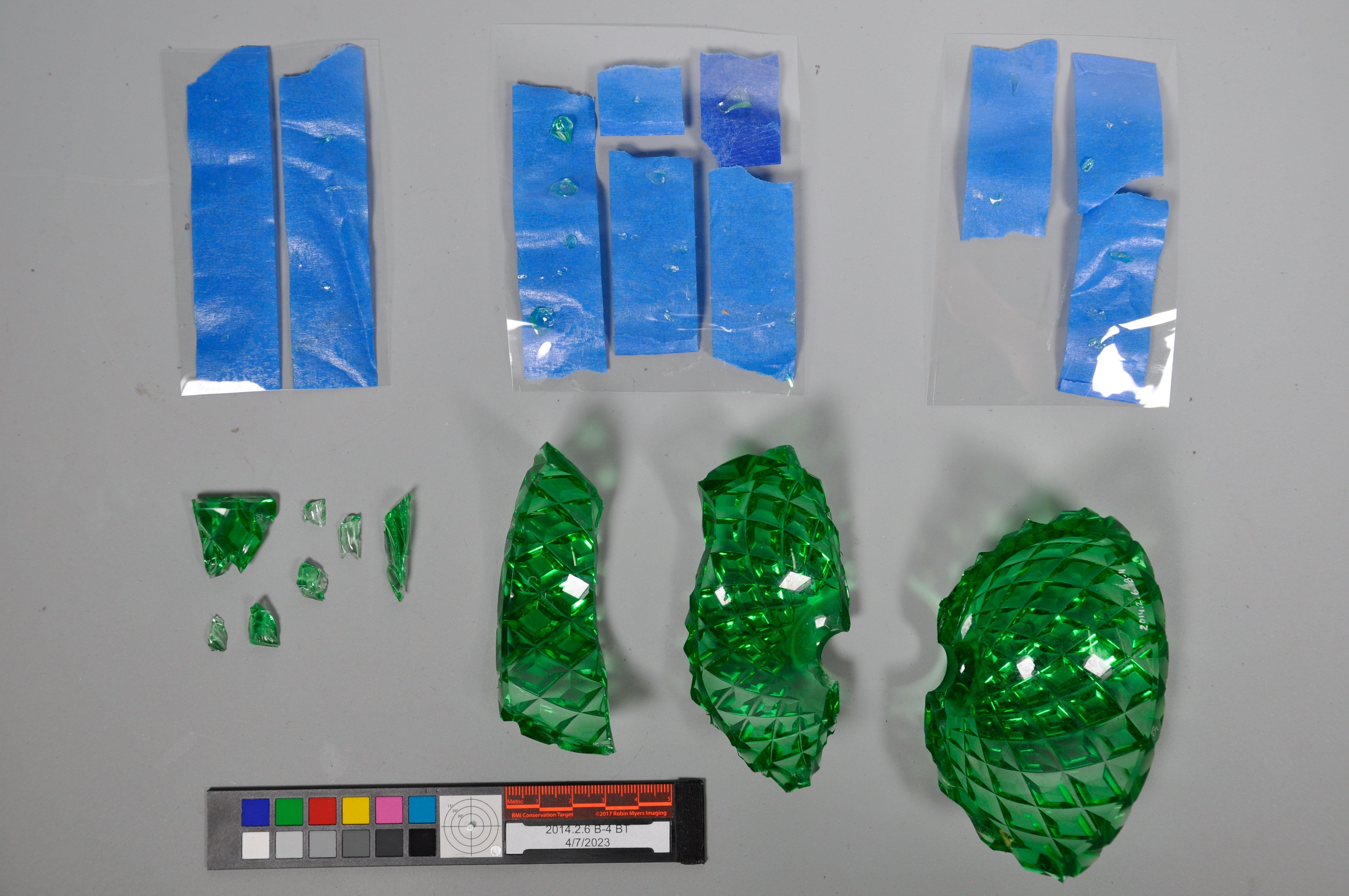
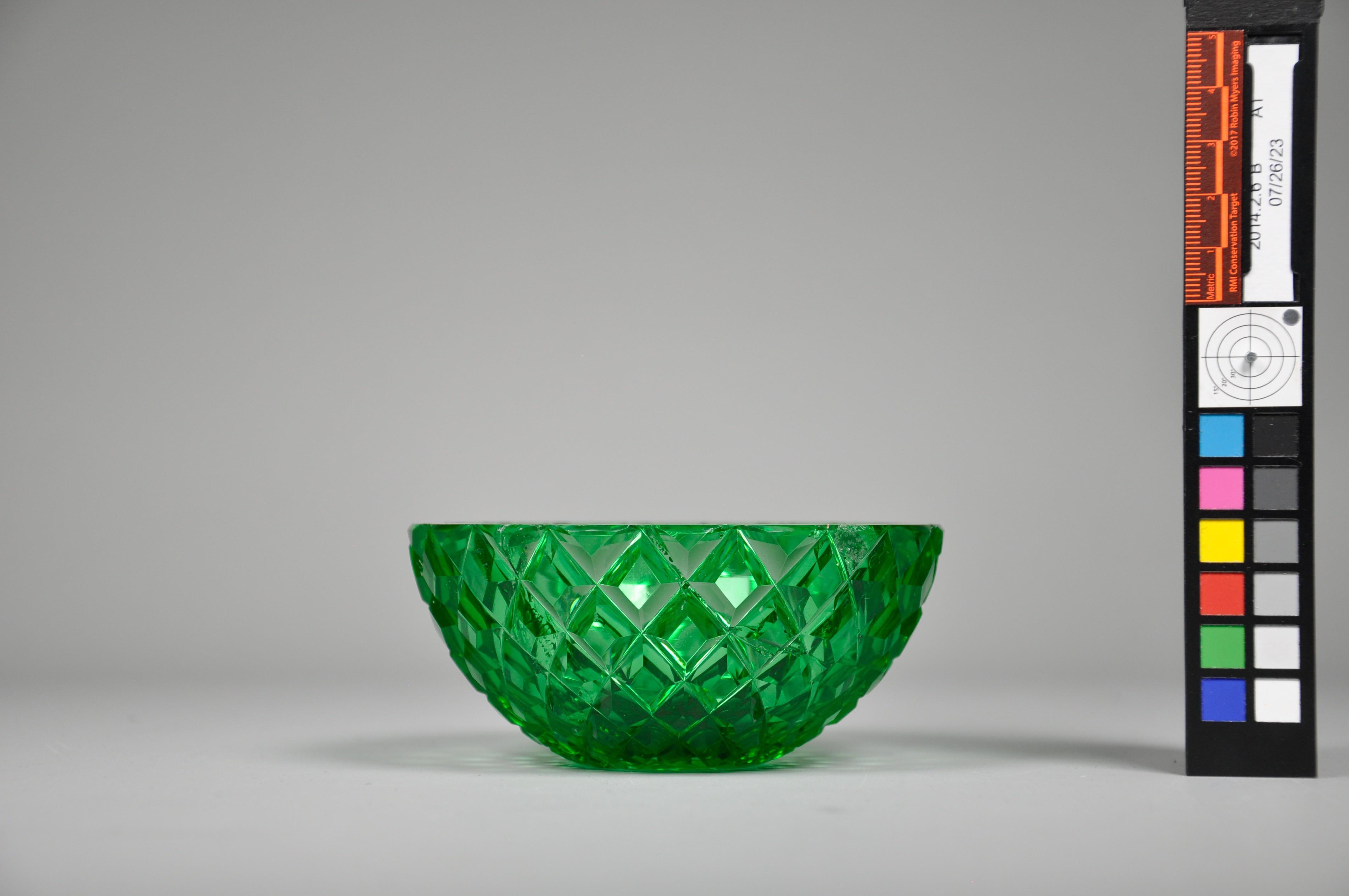
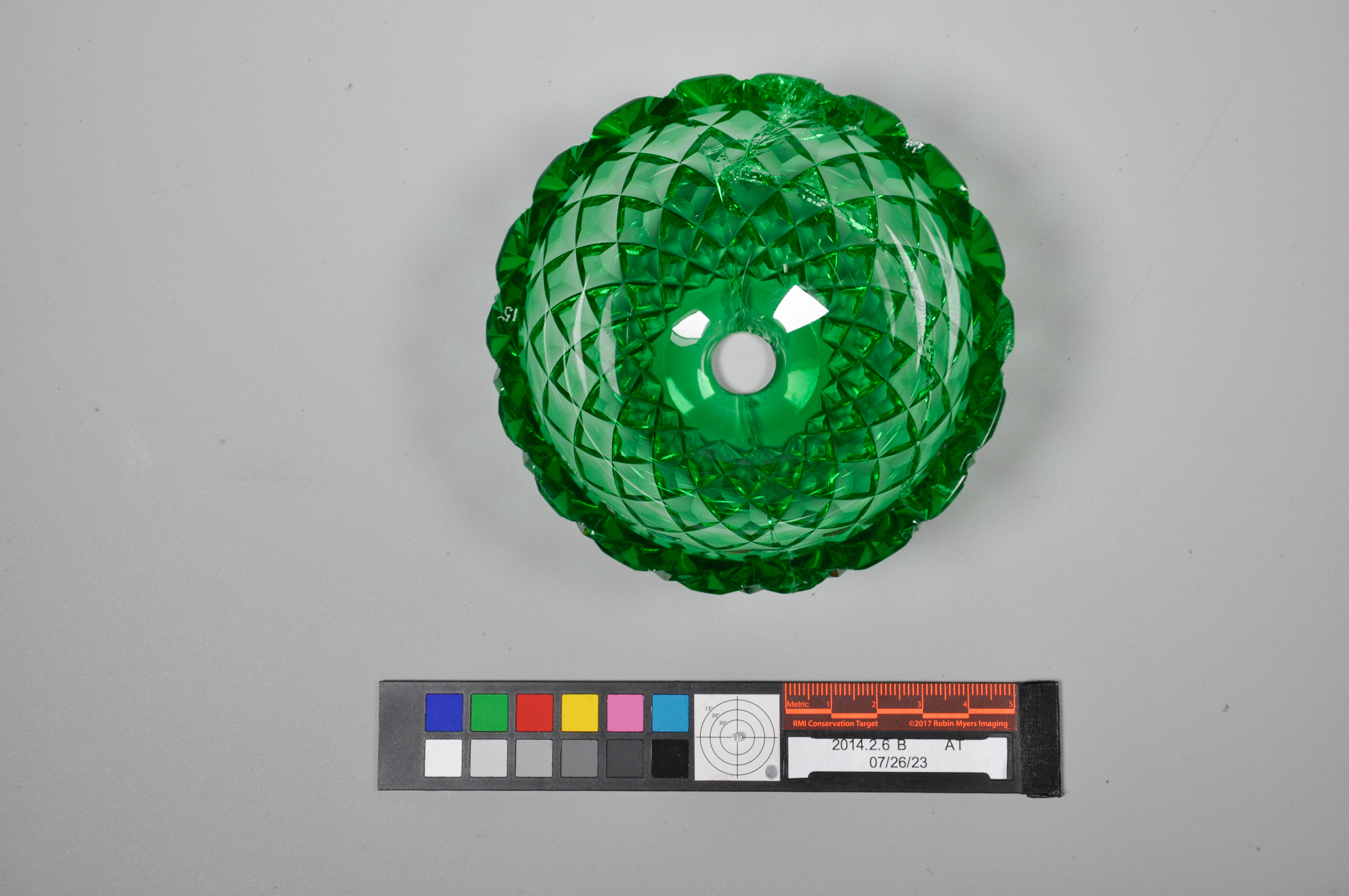
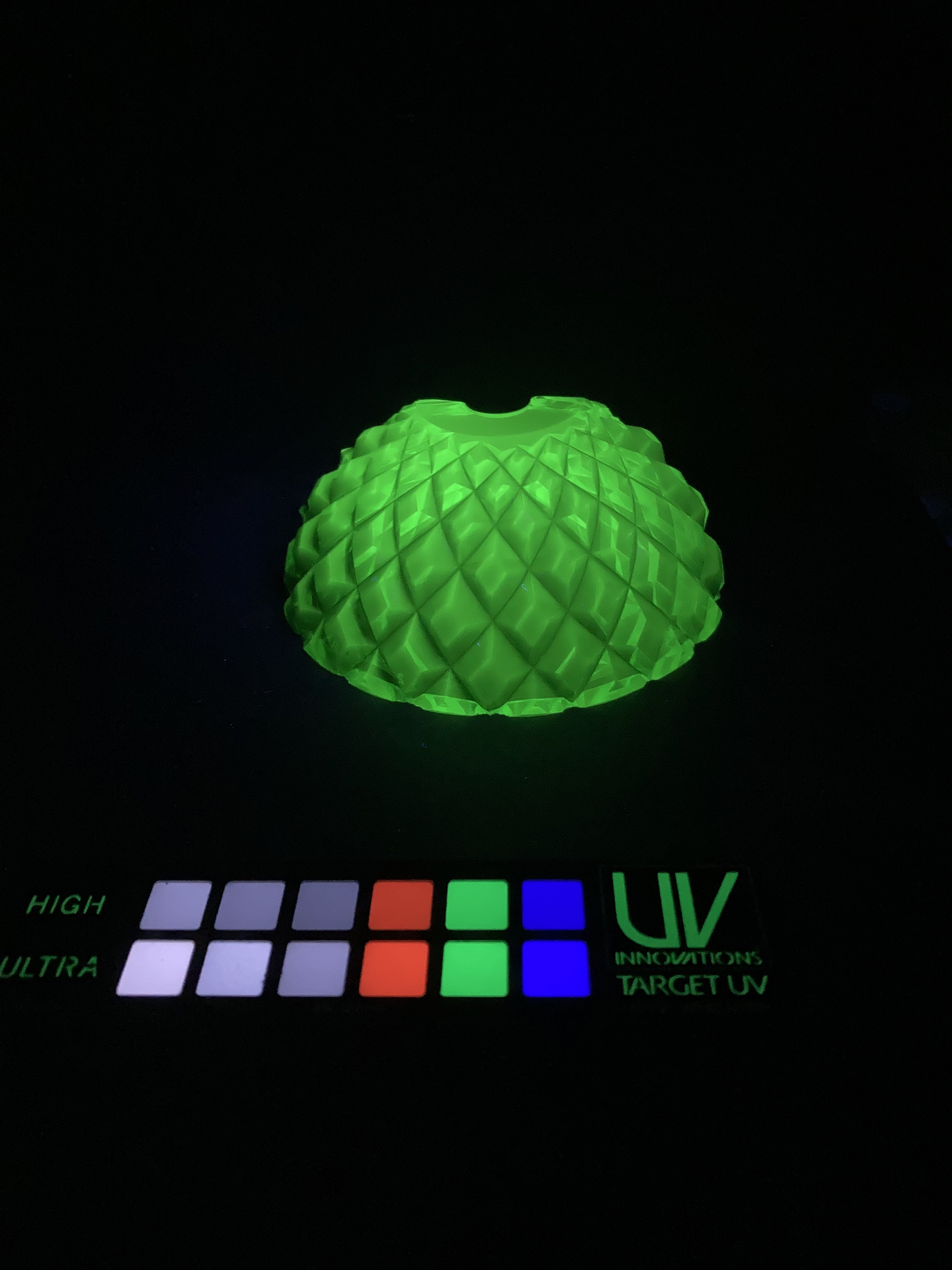
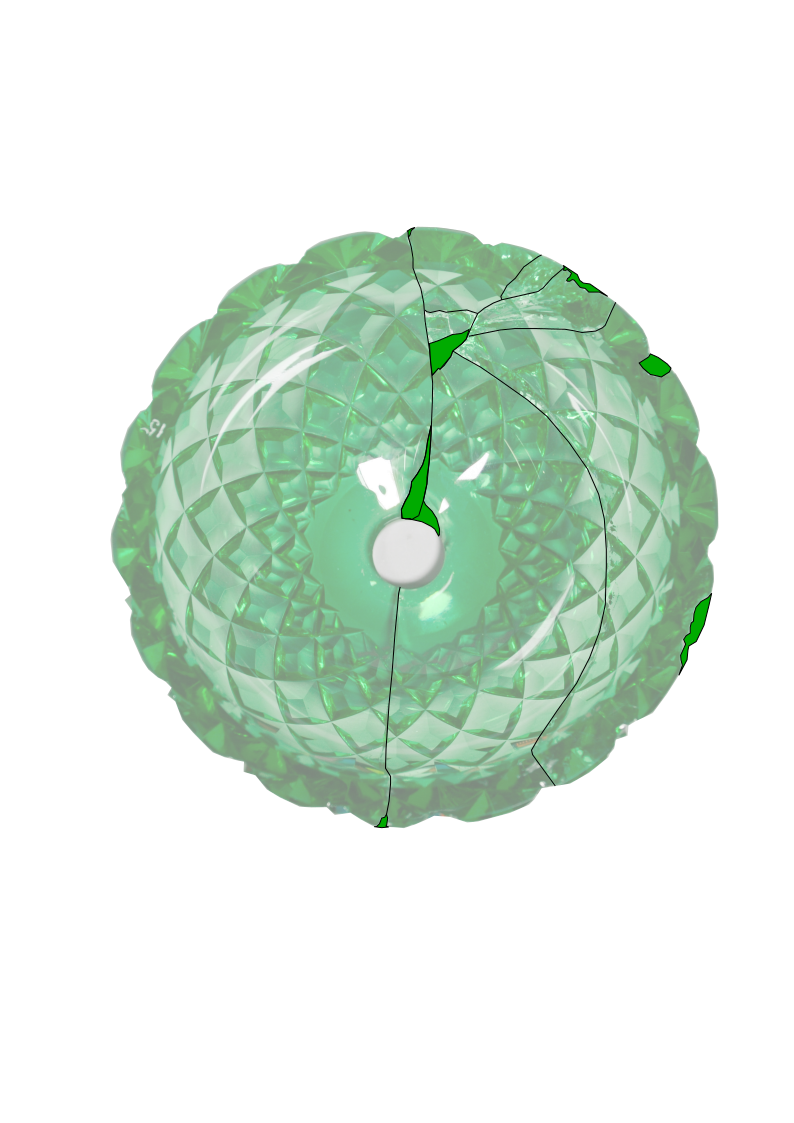
Treatment of a part of a uranium glass wall sconce from the F. & C. Osler Company. Remove old adhesive in a solvent chamber. Then re-adhere with Paraloid B-72. Was able to fit in many more small fragments and ensure a tight alignment.
CMoG 2014.2.6. Courtesy of The Corning Museum of Glass (www.cmog.org) | First photo credit: Lianne Uesato | Third photo credit: F. & C. Osler, Calcutta, Birmingham: F. & C. Osler, 1876-1885, no. 2827 G.
Client:
Corning Museum of Glass
Project Date:
2023
Item Origin:
England, 19th century
Description:
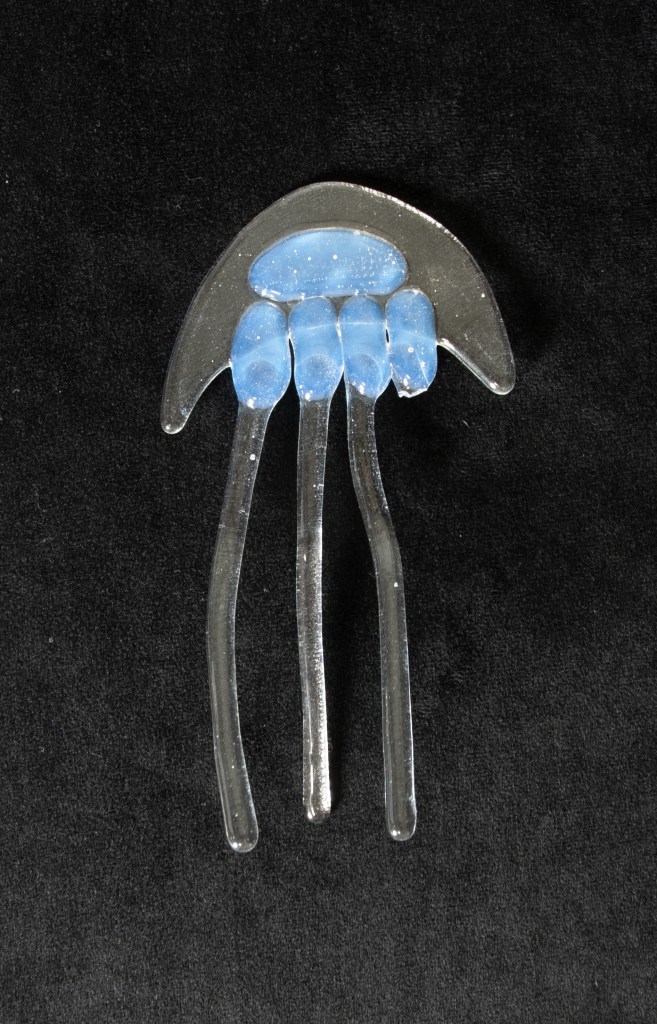
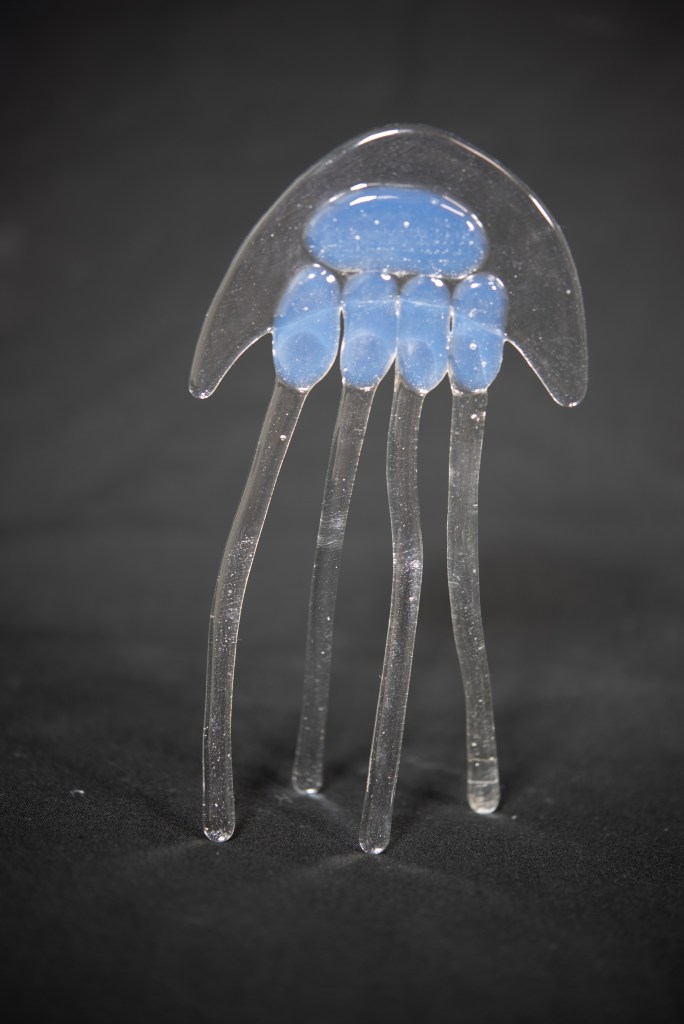
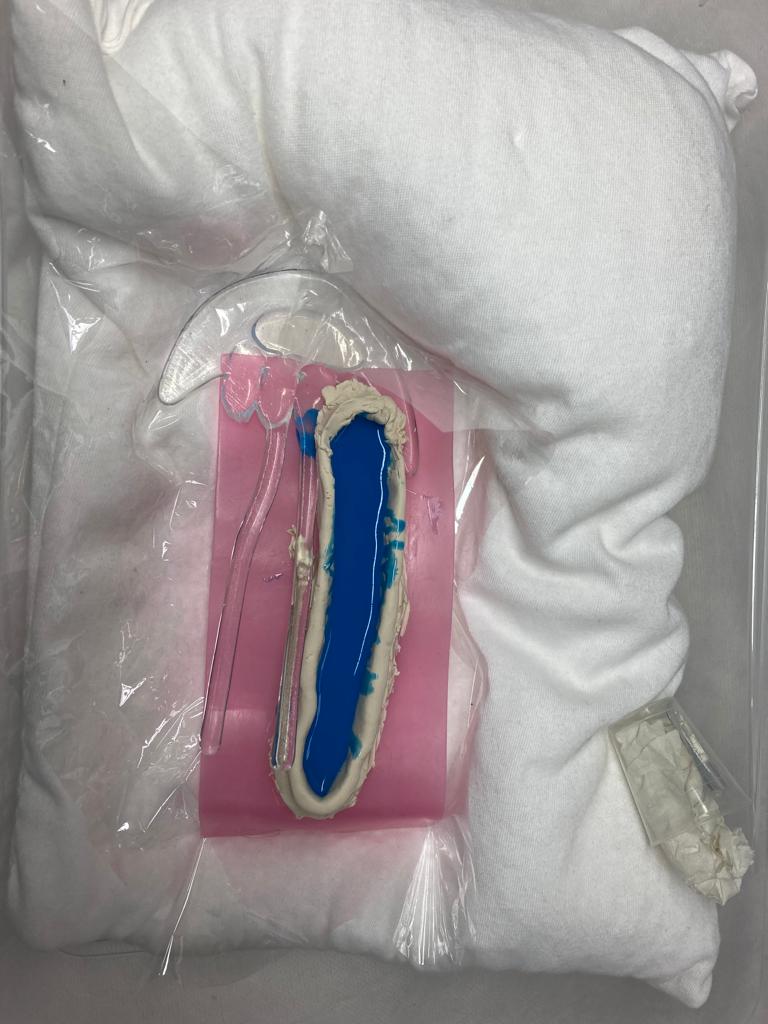
Modern Glass Jellyfish
Treatment of a fused glass object with bent, alternating tentacles so that it is free-standing. The jellyfish was made within the last five years in the Netherlands. A reconstruction was made of a missing tentacle, restoring the aesthetic nature, and allowing the object to stand on its own again. This was done by making a silicone rubber mould of one of the surviving tentacles and casting the reconstruction with HXTAL-NYL-1 epoxy resin, which was manipulated when it was partially set to match the bent nature of the tentacles.
Client:
Private Client
Project Date:
2022
Item Origin:
The Netherlands, 2015-2020

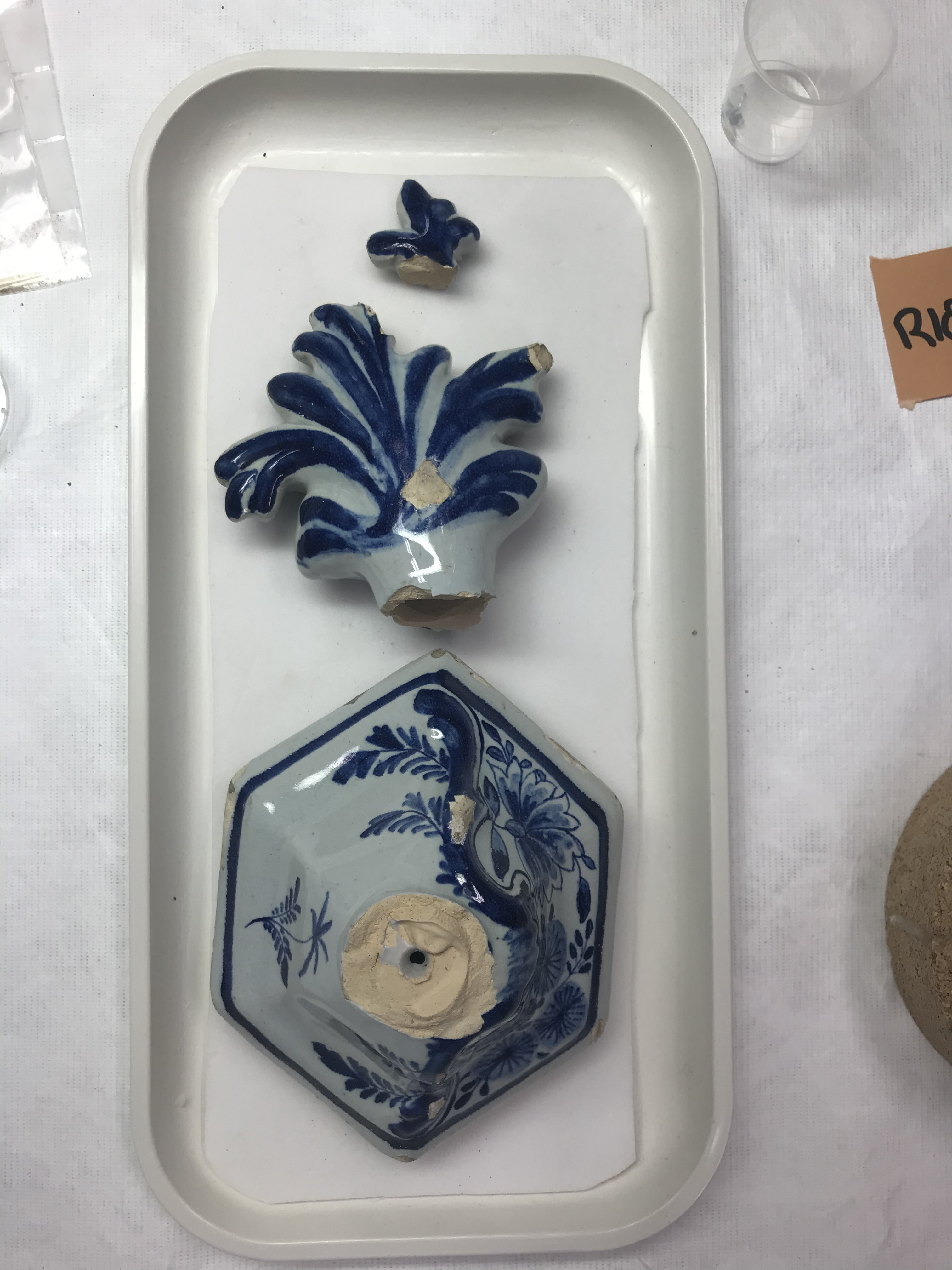
Description:
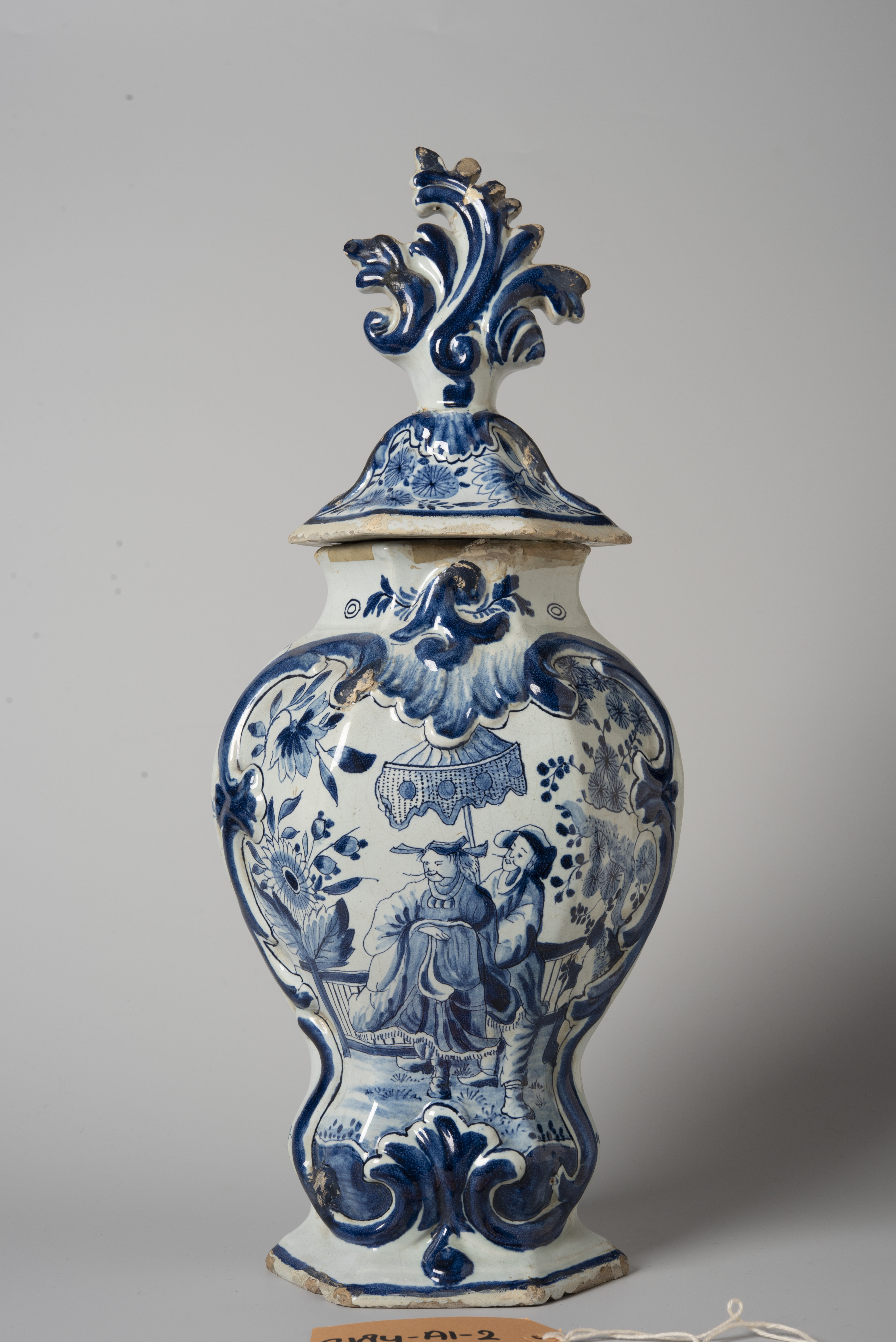
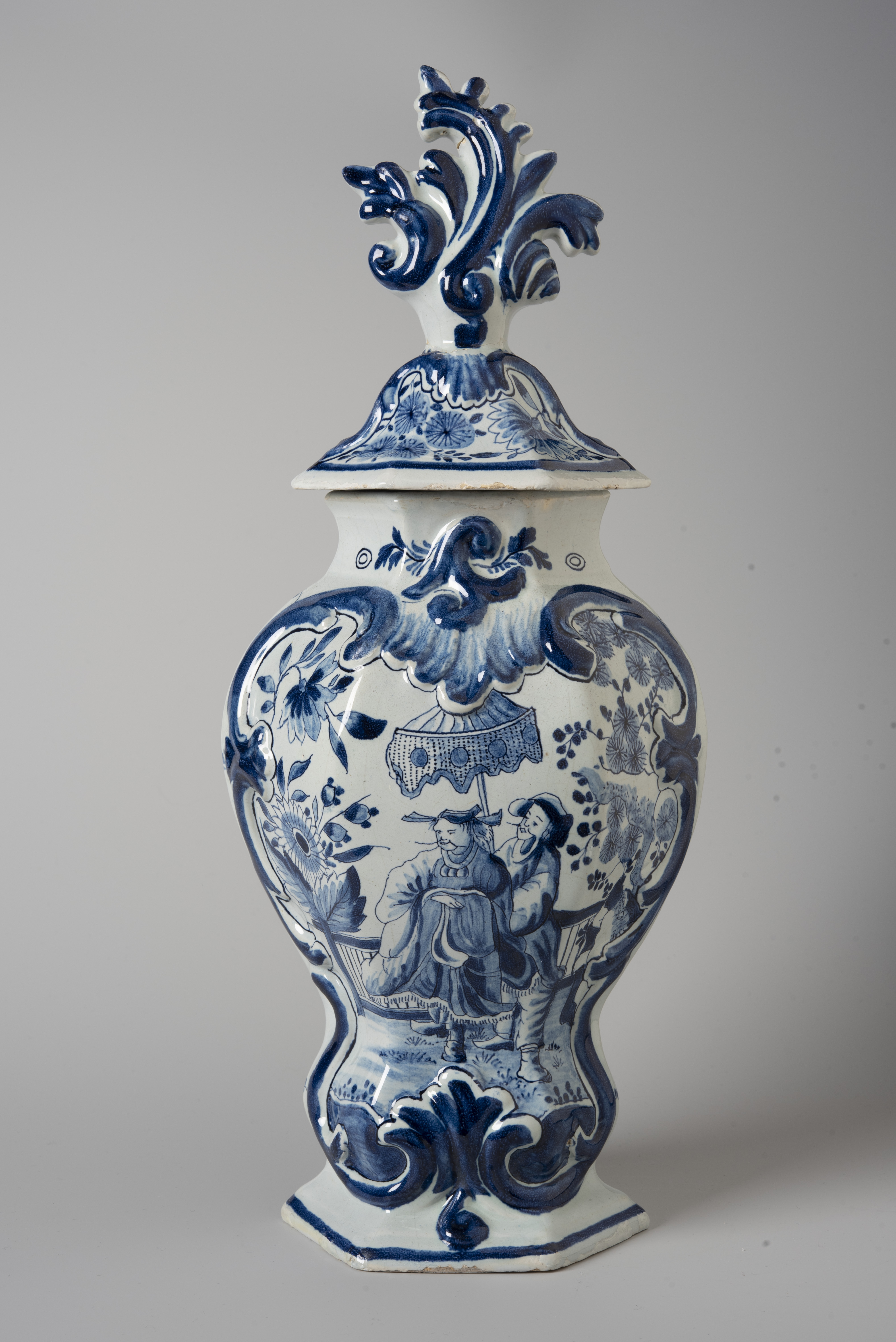
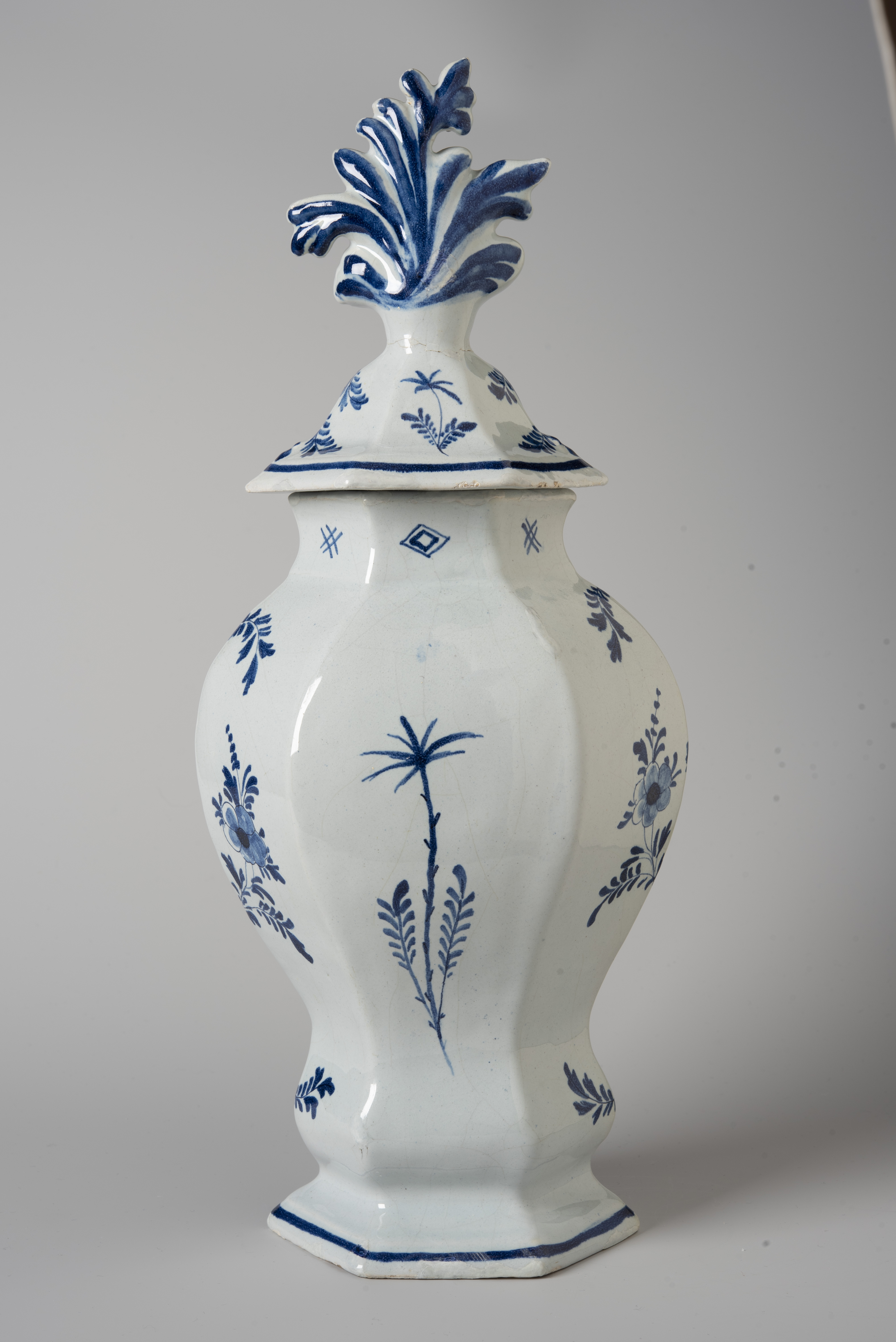
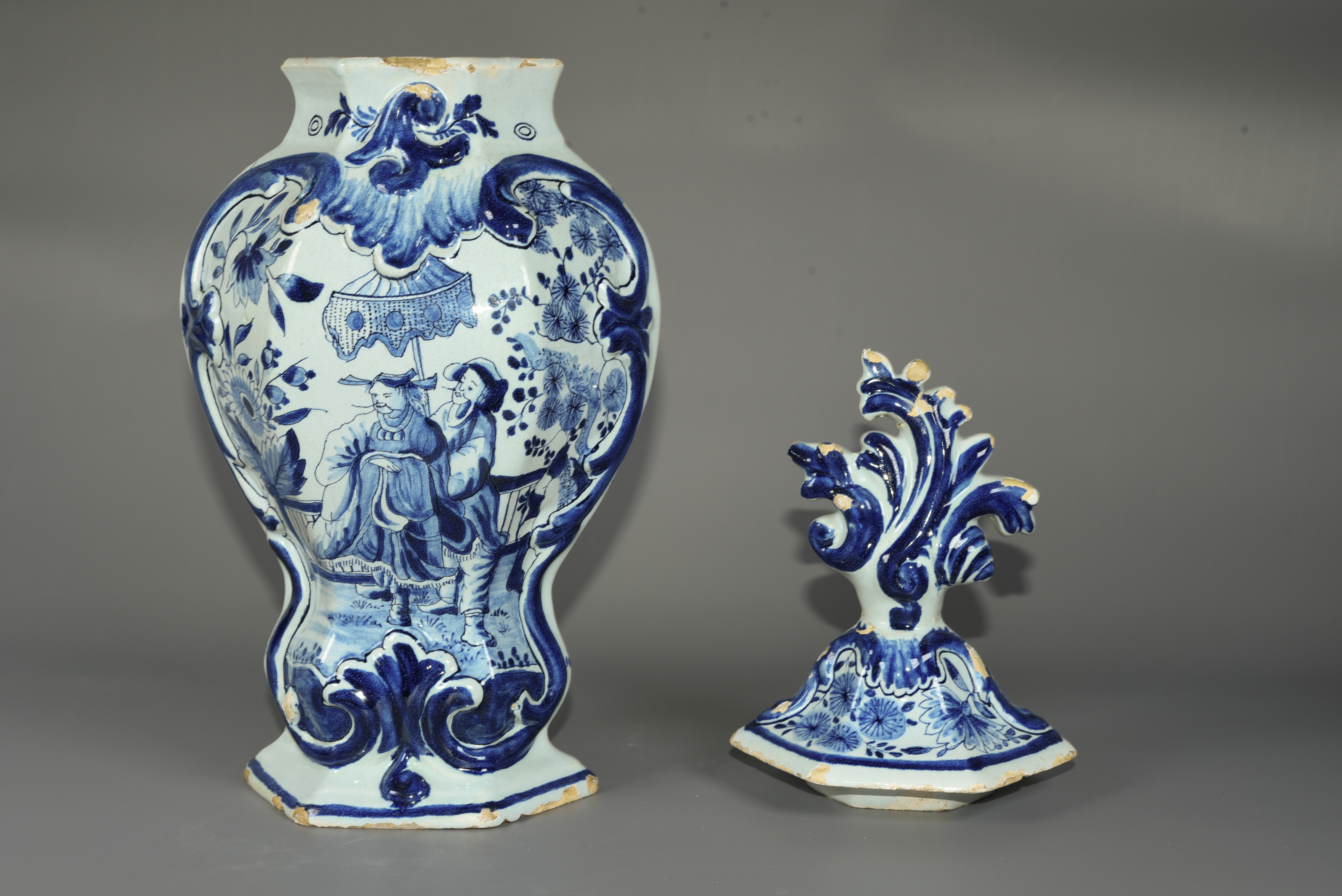
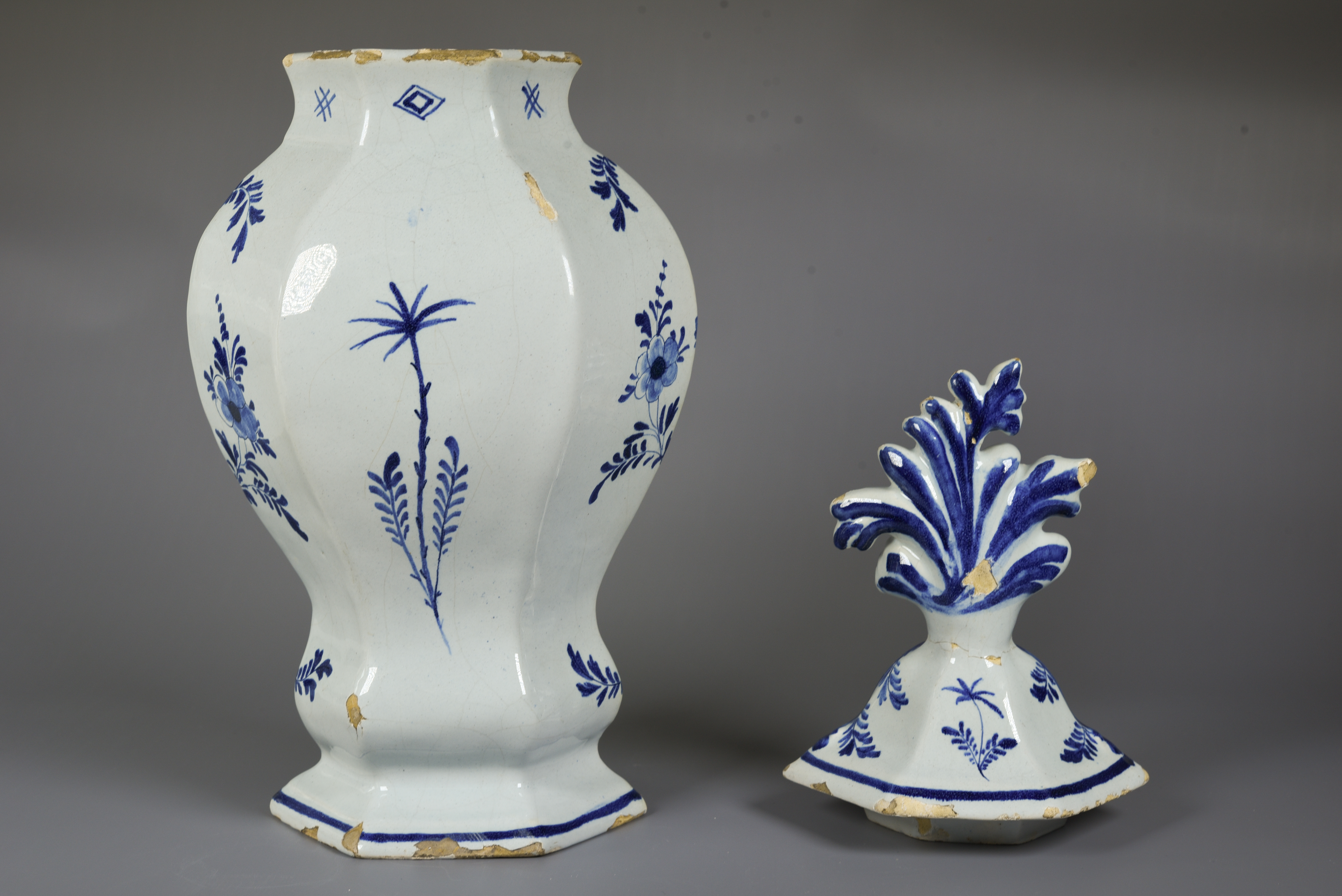
Delftware Garniture
Treatment of a 19th century Dutch Delftware garniture, with an earthenware body and tin glaze. The object had disfiguring old restoration material including double-sided tape, discoloured overpaint, and unknown adhesive. The old restorations were removed, using solvents and mechanical cleaning. Glaze fragments and the fragments of the cover were adhered using Paraloid B-72. Lacuna in the ceramic and glaze were filled with Modostuc and retouched with Golden acrylics.
R184-A1-2 Courtesy of the Rijksdienst voor het Cultureel Erfgoed (www.cultureelerfgoed.nl/)
Client:
Rijksdienst voor het Cultureel Erfgoed
Project Date:
2020
Item Origin:
The Netherlands, 19th century
 COSTELLO CONSERVATION